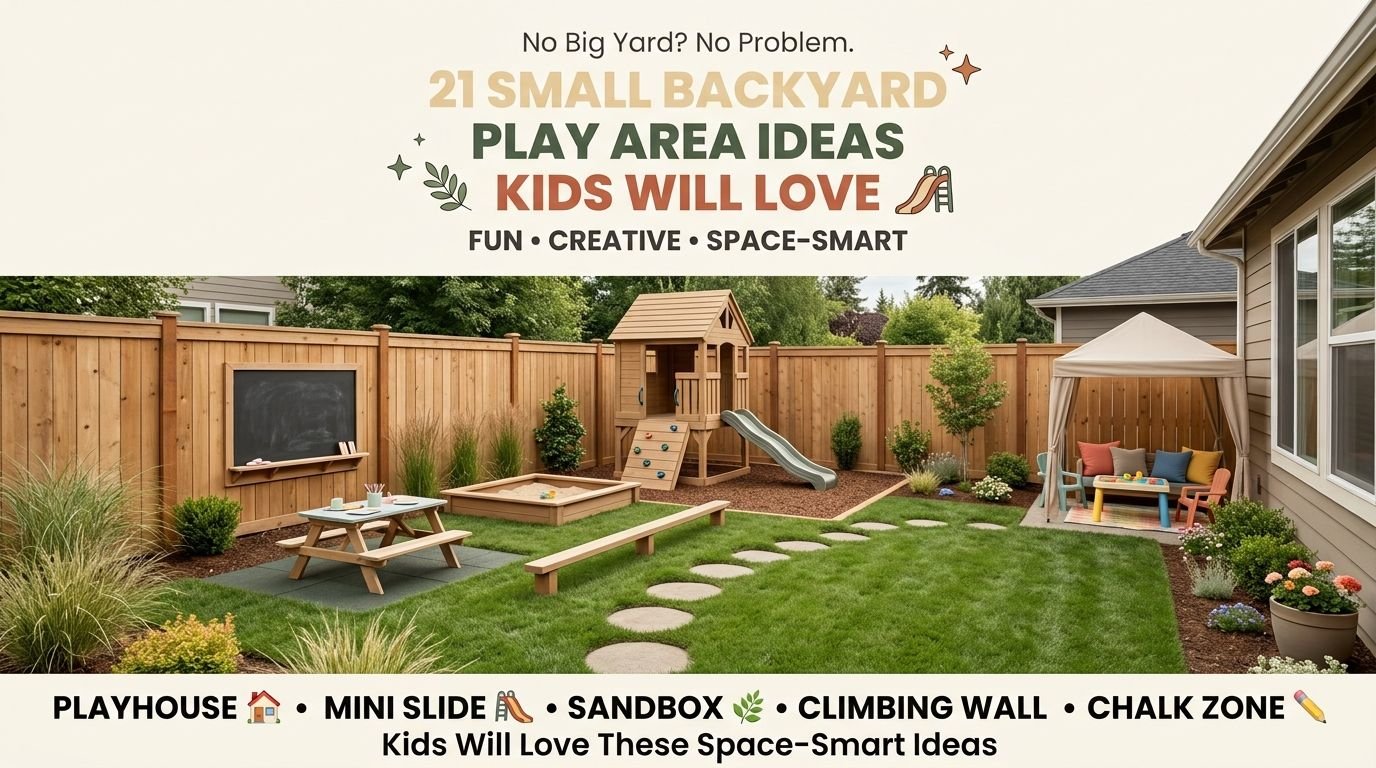
Kids do not need a huge yard to make huge memories. Even a tiny outdoor space can become a place for climbing, drawing, pretending, exploring, and laughing together.
If you live in a small home or apartment with limited outdoor space, creating a Backyard Play Area can feel almost impossible. However, you do not need an expensive playground or a large lawn. With a little creativity, you can turn even a compact outdoor area into a fun and beautiful space your kids will actually use.
I have found that the best small outdoor spaces focus on simple activities instead of bulky equipment. This guide shares practical ideas that maximize space, keep costs low, and make outdoor play more enjoyable.
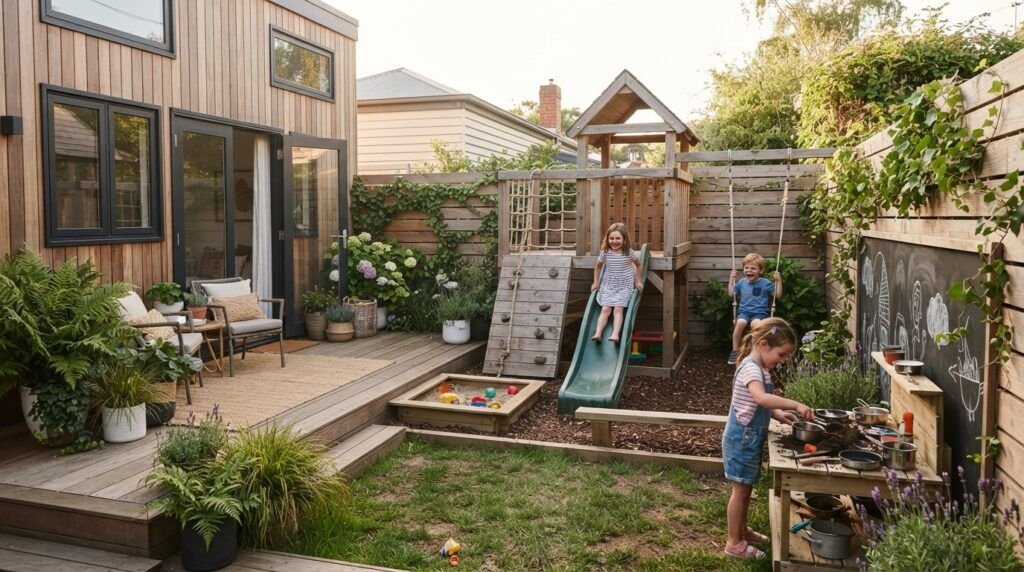
Quick Answer: How Do You Create a Small Backyard Play Area?
To create a small Backyard Play Area, choose two or three compact activities that match your child’s interests. A sandbox, chalk wall, mud kitchen, stepping stones, outdoor art station, or small playhouse can provide hours of fun without taking over the yard. Use walls, fences, and corners to save valuable floor space.
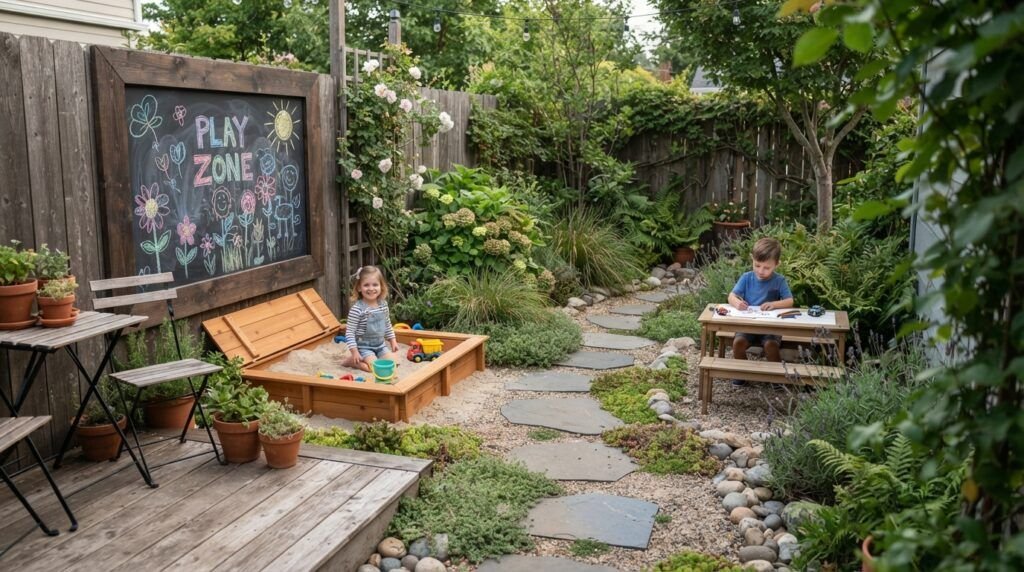
1. Build a Compact Wooden Playhouse
A small wooden playhouse can give children their own special place without consuming the entire yard.
Choose a simple design with a small footprint. Then, add a tiny bench, pretend kitchen, or a few cushions inside.
Because the structure doubles as a decorative feature, it can blend nicely with your home’s exterior.
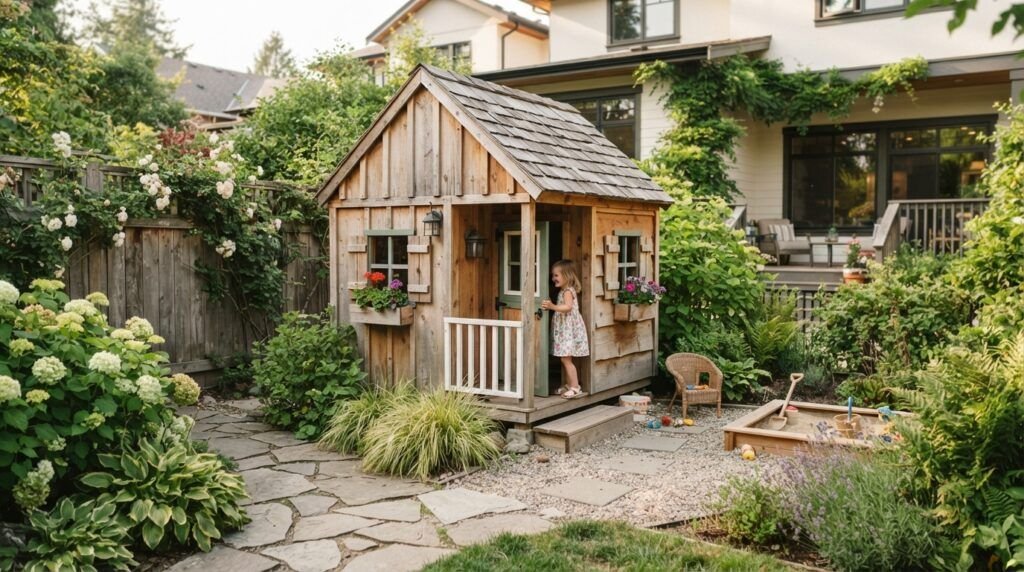
2. Create a DIY Sandbox
A sandbox does not need to be large. In fact, a compact square sandbox can fit neatly into an unused corner.
Add a simple wooden frame and a removable cover. Then, keep a small basket nearby for buckets, shovels, and molds.
This is one of the easiest DIY backyard play area ideas for families watching their budget.
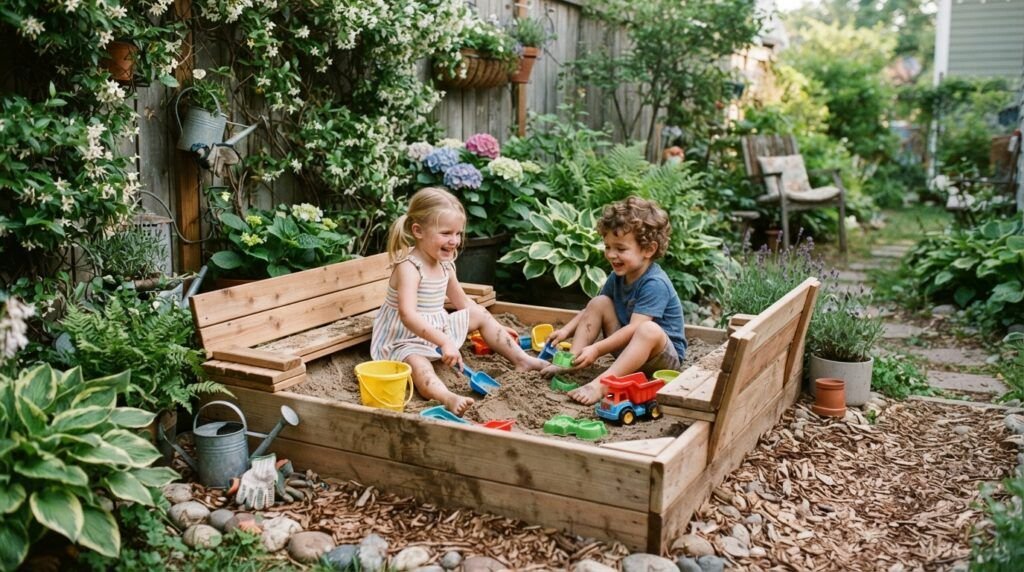
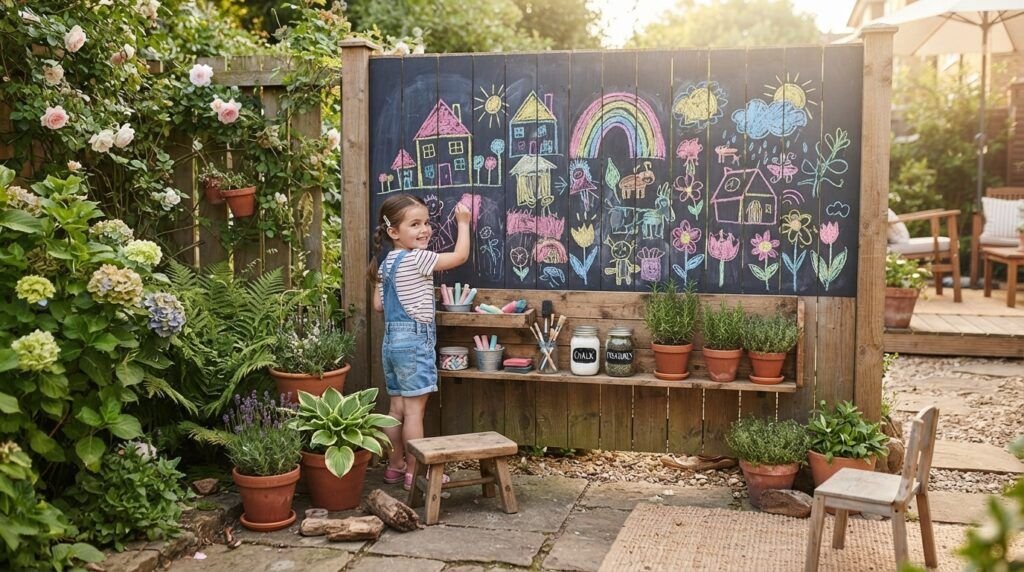
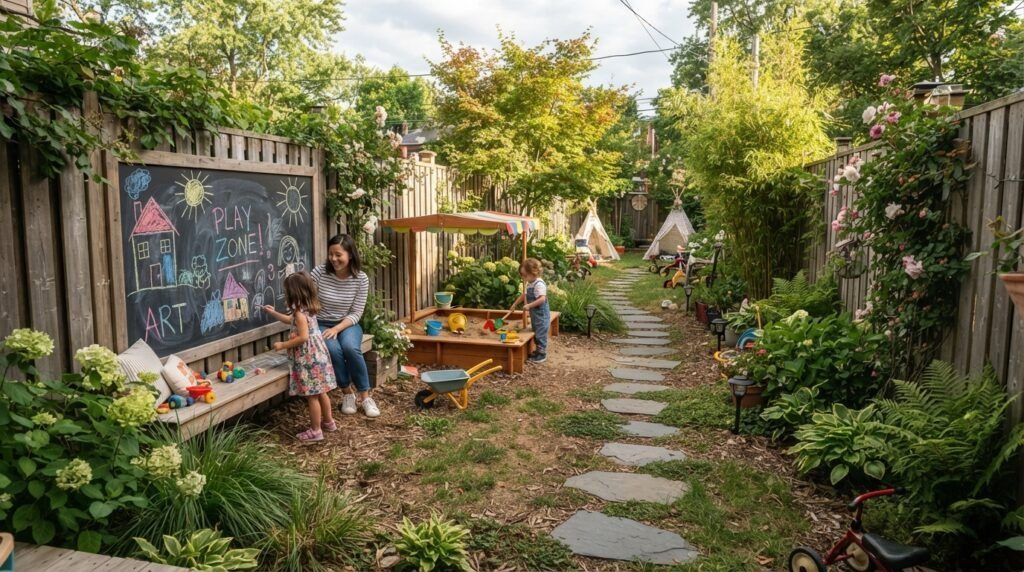
3. Turn Your Fence Into a Chalkboard
When floor space is limited, use your walls and fences.
Paint one section of a suitable fence with outdoor chalkboard paint. Next, add a small shelf for chalk and washable art supplies.
This idea gives children a creative activity while keeping most of the ground open.
4. Set Up a Mini Mud Kitchen
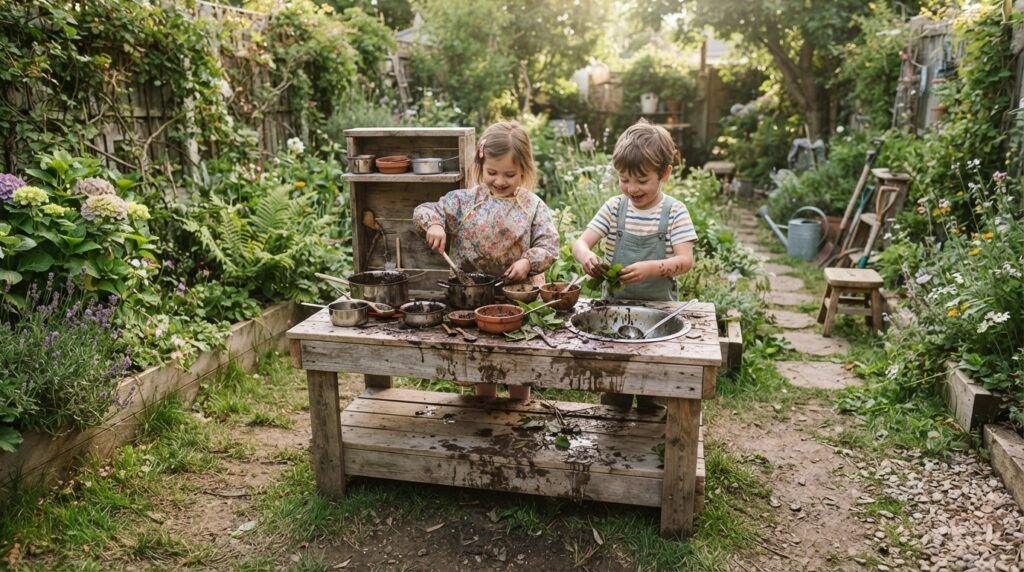
Kids love pretending to cook, and a mud kitchen takes surprisingly little space.
Use a small outdoor table or repurposed cabinet. Add old pots, bowls, wooden spoons, and containers.
Place it near a garden area so children can use leaves, sticks, and other suitable natural materials during pretend play.
5. Design a Backyard Play Area Without a Playground
You do not need a traditional playground to make outdoor play exciting.
Instead, combine several smaller activities such as:
- A sandbox
- Stepping stones
- A chalk wall
- A mud kitchen
- An outdoor art table
- A sensory garden
- A small obstacle course
This approach works especially well when you want the backyard to remain attractive and flexible.
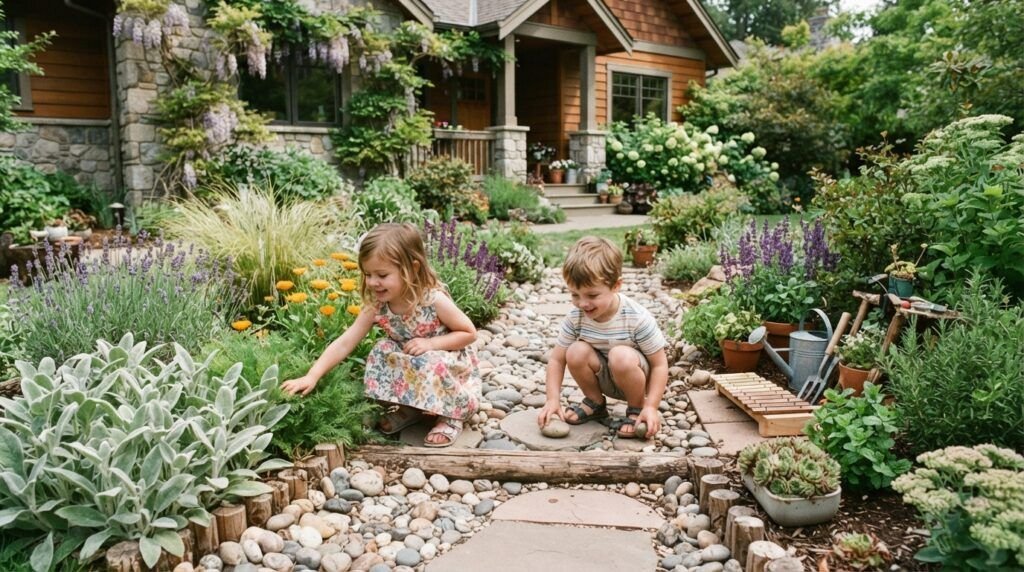
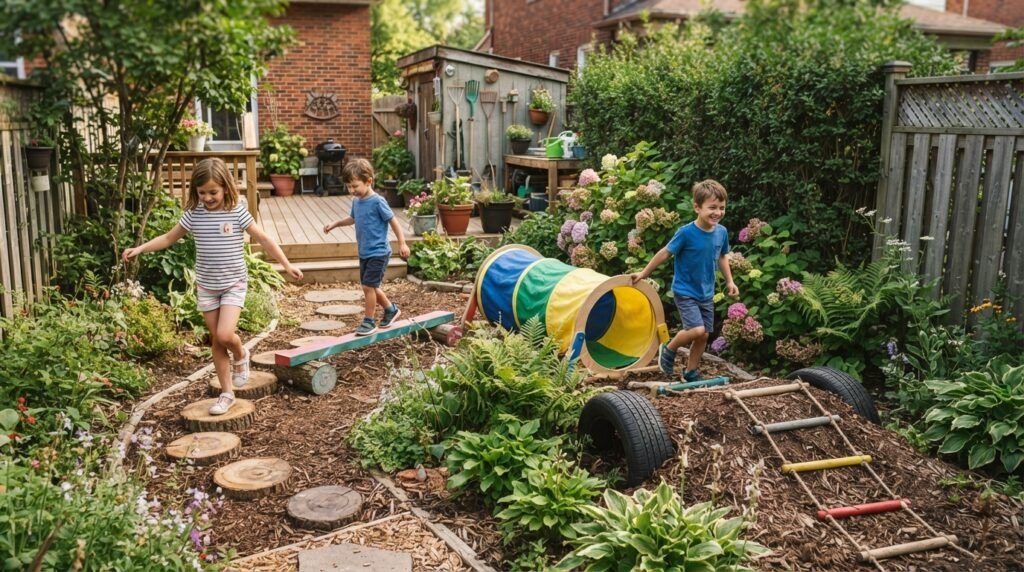
6. Add a Stepping Stone Adventure
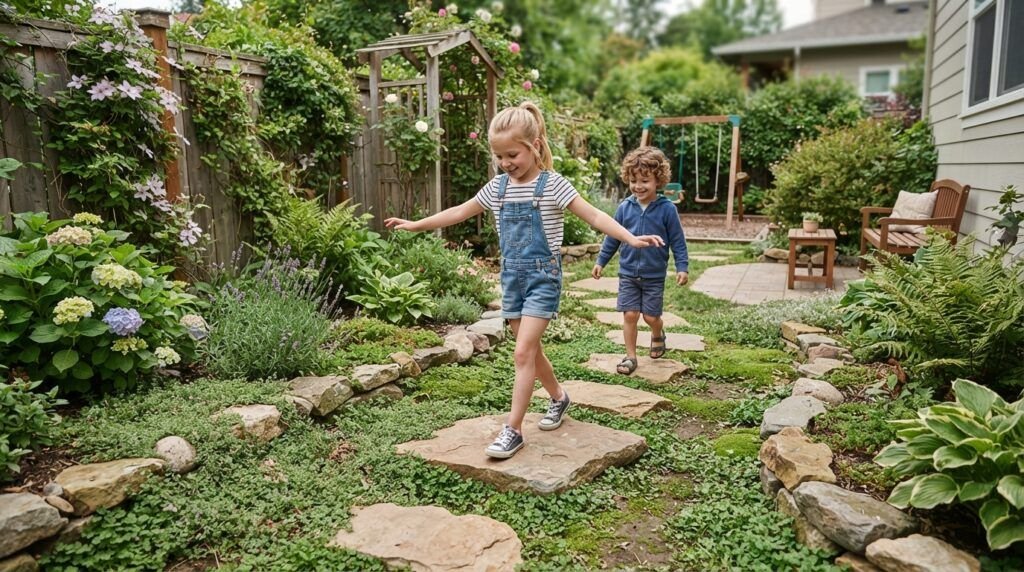
Simple stepping stones can turn an ordinary garden path into an adventure.
Arrange sturdy stones in different patterns and encourage children to step, balance, and move from one to another.
However, choose stable materials and keep enough space around the path for safe movement.
7. Create a Sensory Garden
A sensory garden gives children something interesting to touch, smell, see, and explore.
Choose suitable plants with different textures and scents. Then, add smooth stones or a small pathway to make the area more interactive.
Because it looks like landscaping, this idea can blend beautifully with the rest of your outdoor decor.
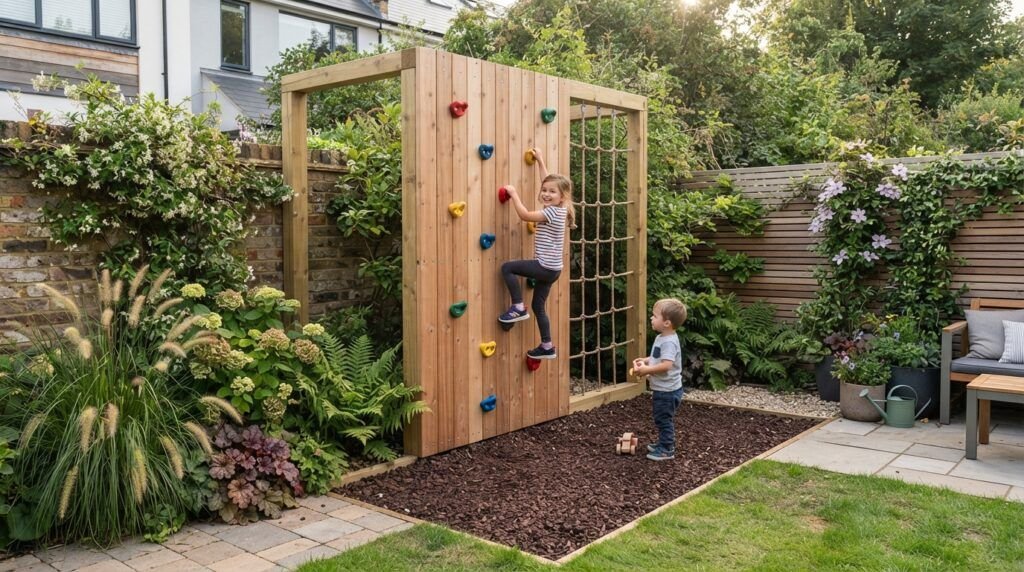
8. Install a Small Climbing Wall
If your child loves climbing, a compact climbing wall can provide active entertainment without a complete playset.
Use a professionally designed structure suitable for the child’s age and follow appropriate installation and safety guidance.
Most importantly, keep a suitable landing area beneath it.
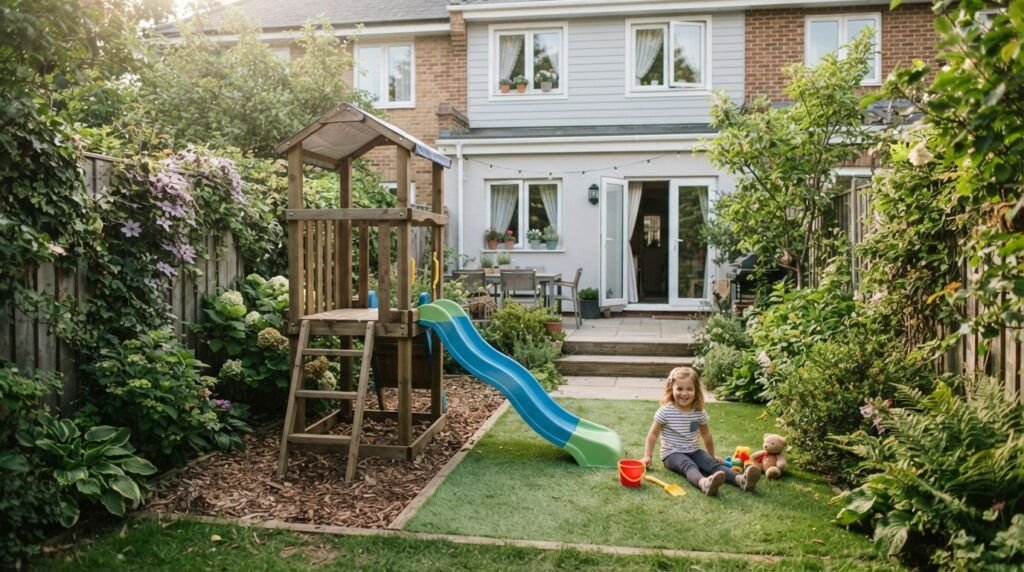
9. Add a Small Slide
A full playground may not fit your yard, but a compact slide might.
Place it beside a small platform and keep the surrounding area clear. Choose equipment that suits your child’s age and available space.
This gives kids an active play option while preserving valuable yard space.
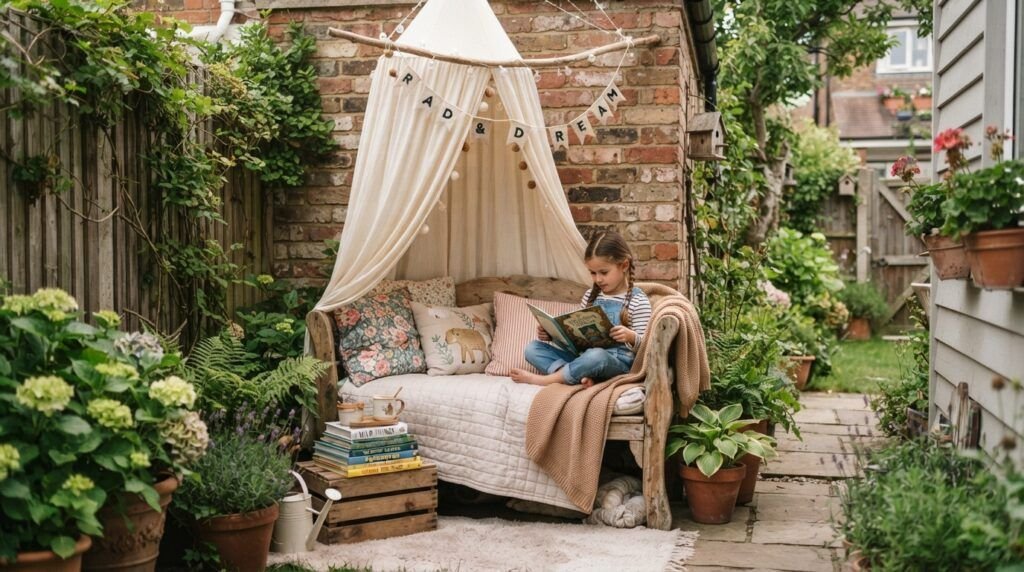
10. Make a Cozy Reading Corner
Outdoor play does not always need to be energetic.
Create a quiet corner with a small bench, washable cushions, and a weather suitable canopy. Add a basket of books for easy access.
This little retreat can become a favorite place for reading, relaxing, or imaginative play.
11. Build a Simple Obstacle Course
An obstacle course can provide variety without requiring permanent structures.
Use stepping stones, cones, balance elements, tunnels, or other age appropriate items. You can also change the layout regularly.
As a result, the same space can feel new and exciting.
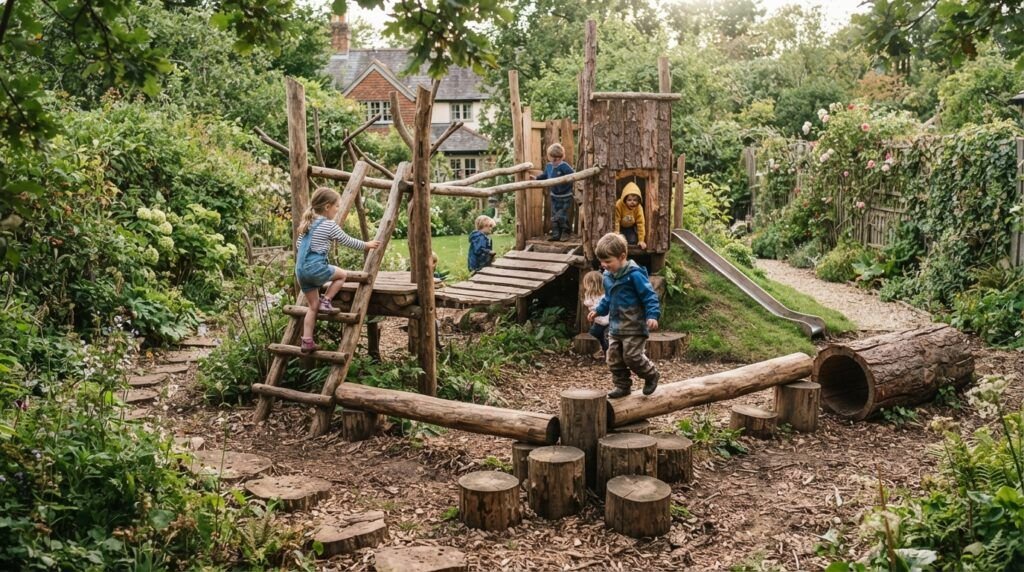
12. Use Natural Logs for Play
Natural materials can make a Backyard Play Area feel like part of the garden.
Use sturdy logs as stepping elements or simple seats. Arrange them carefully and check them regularly for stability.
The natural appearance also works well with modern, rustic, or cottage style outdoor decor.
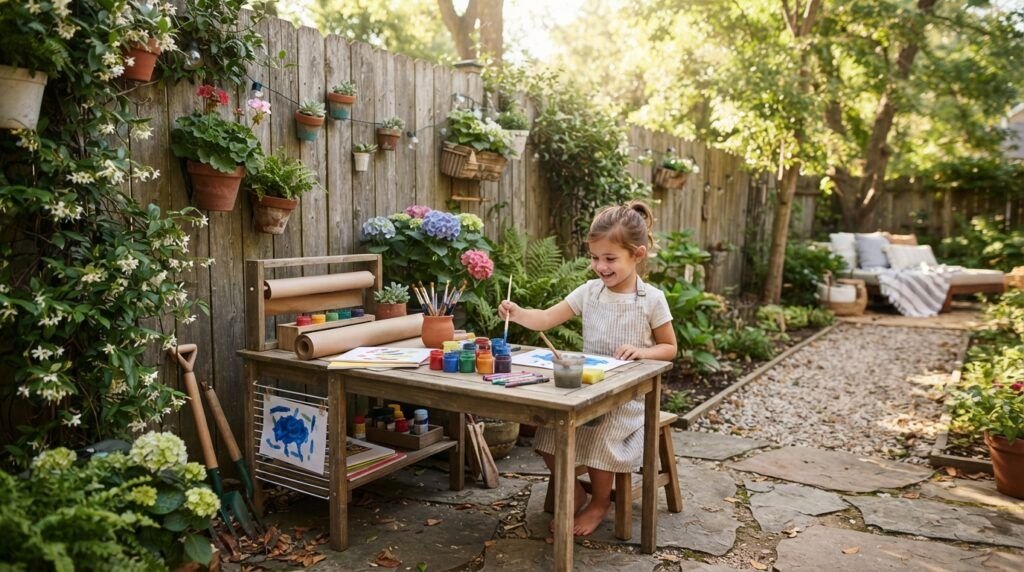
13. Create an Outdoor Art Station
A tiny table can become an outdoor creative studio.
Place it against a fence or near a wall. Then, use a small storage container to organize washable paints, crayons, paper, and other supplies.
This is a smart option for children who enjoy drawing more than climbing.
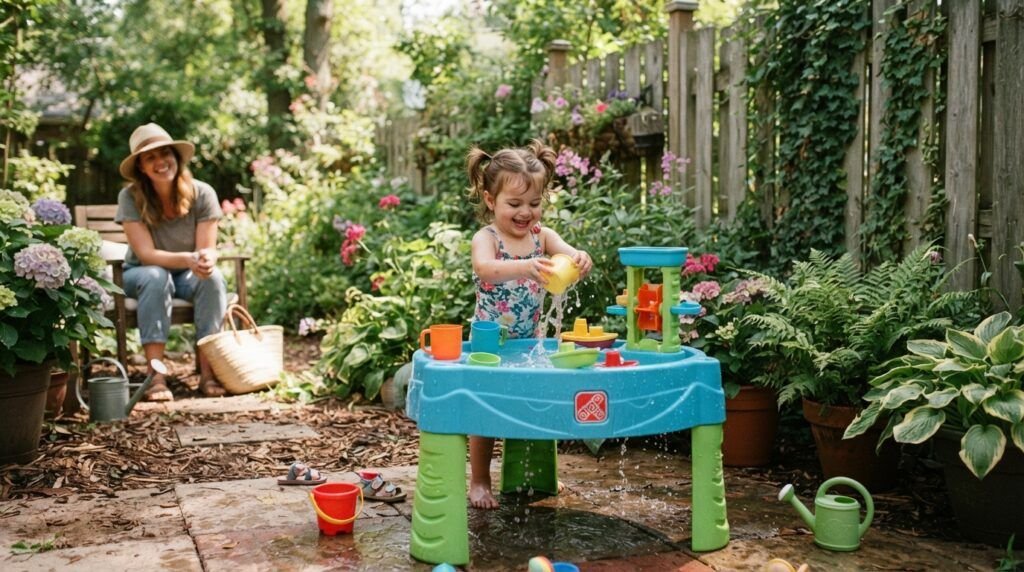
14. Add a Water Play Corner
A small water table can keep children entertained on warm days.
Choose a compact model that you can move or store when necessary. Place it on a suitable surface where splashes will not cause problems.
For toddlers, keep water play supervised at all times.
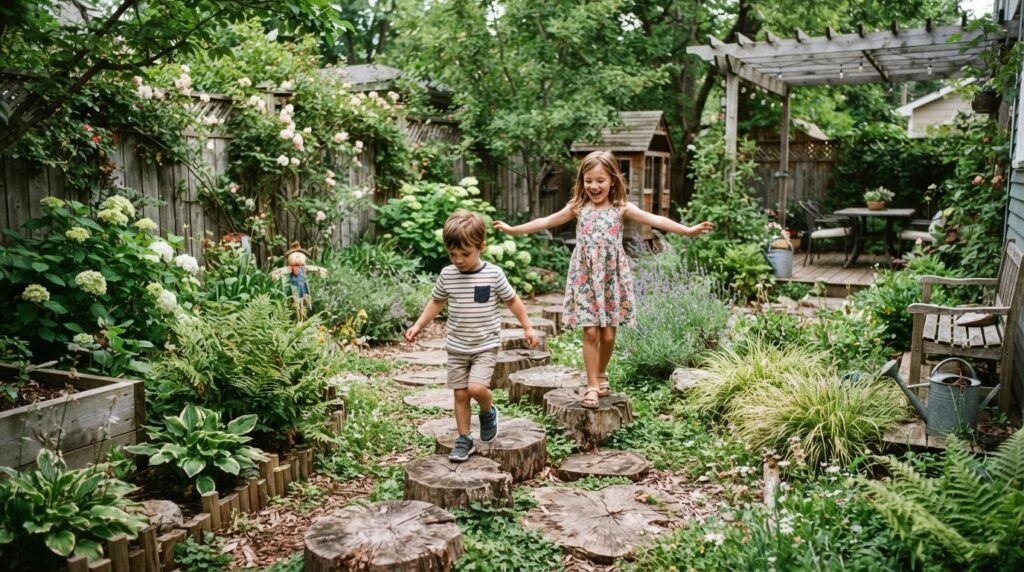
15. Create a Tree Stump Path
Sturdy tree stumps can become stepping and balancing features.
Arrange them in a simple path and leave appropriate space between each one. You can also use a few as seats.
This idea adds natural character while creating another activity for children.
16. Make a Narrow Yard Work Harder
Long, narrow yards need a different layout.
Instead of placing a large structure in the middle, create a linear play zone along one side. Use the fence for chalk activities and place compact features along the remaining edge.
These narrow-yard play ideas leave the center open, making the space easier and safer to enjoy.
17. Choose Fold Away Activities
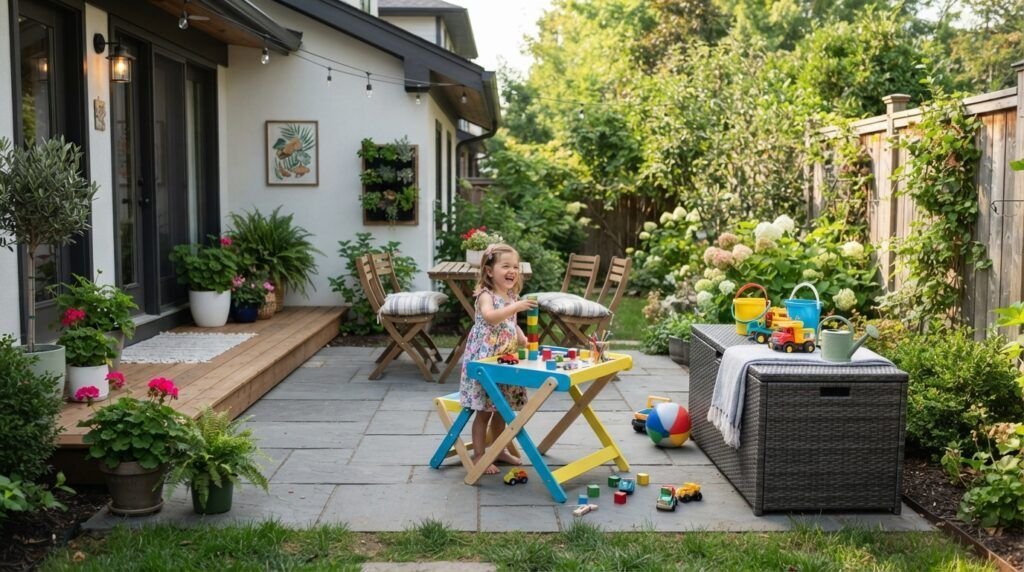
If your outdoor space serves multiple purposes, choose items that can disappear when playtime ends.
A folding table can become an art station. Portable toys can go into a storage box. A small tent can fold away.
Therefore, your backyard can quickly change from a play space to a relaxing family area.
18. Build a Pretend Shop
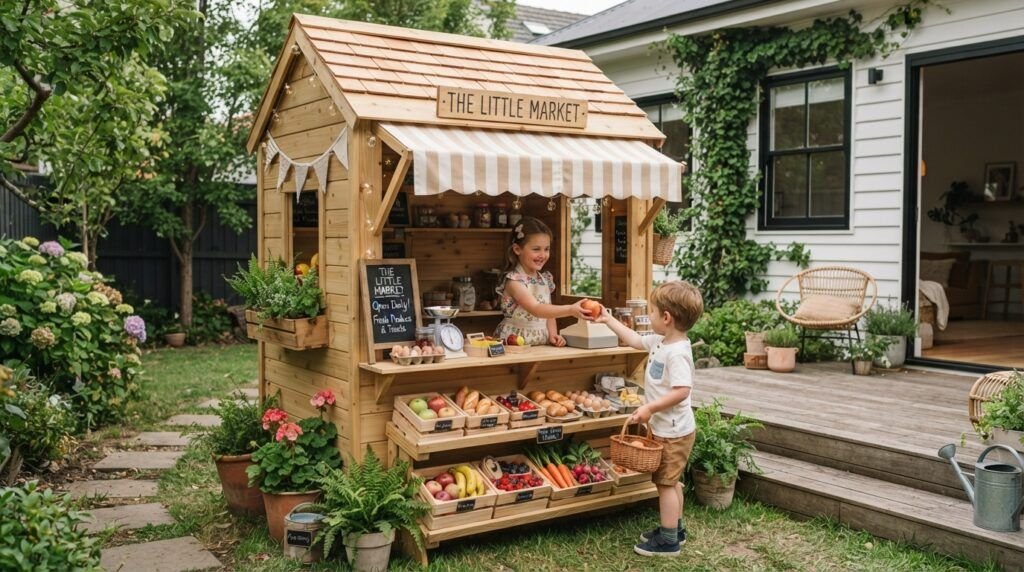
A small pretend shop can encourage hours of imaginative play.
Create a narrow wooden counter with a small awning. Kids can turn it into a café, market, lemonade stand, or toy store.
Keep the design simple so it does not overwhelm the surrounding decor.
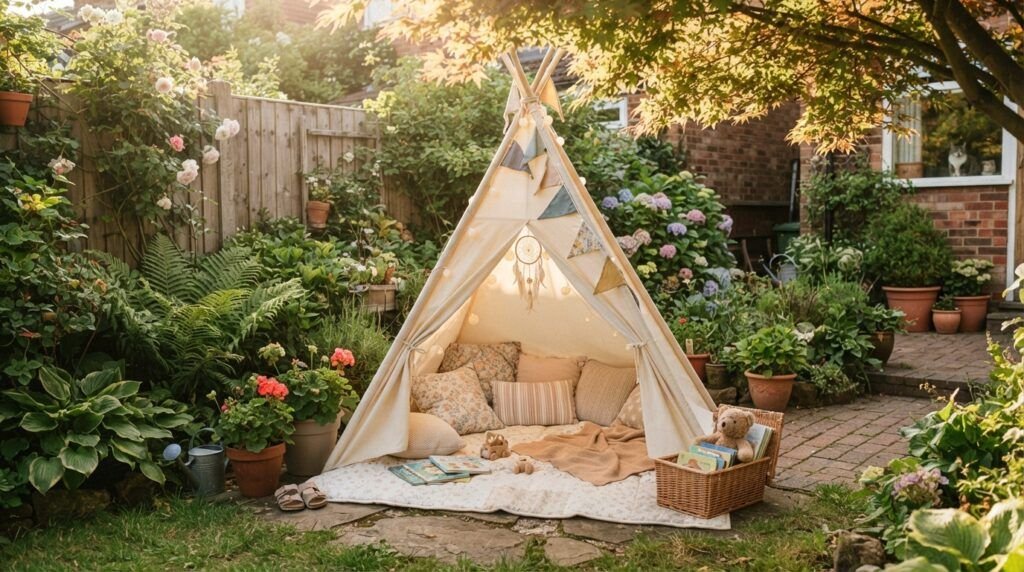
19. Add a Small Outdoor Tent
A play tent can create an instant hideaway.
Place it on a comfortable outdoor mat and add a few washable cushions. Kids can use it for reading, pretend camping, or quiet time.
When space becomes necessary for another activity, simply move or fold it away.
20. Combine Play With Your Patio
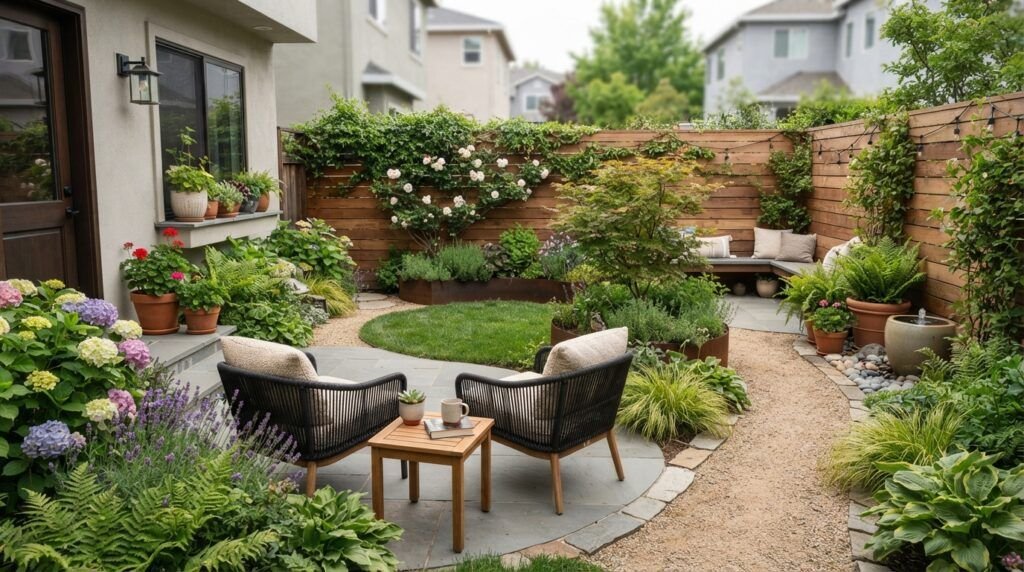
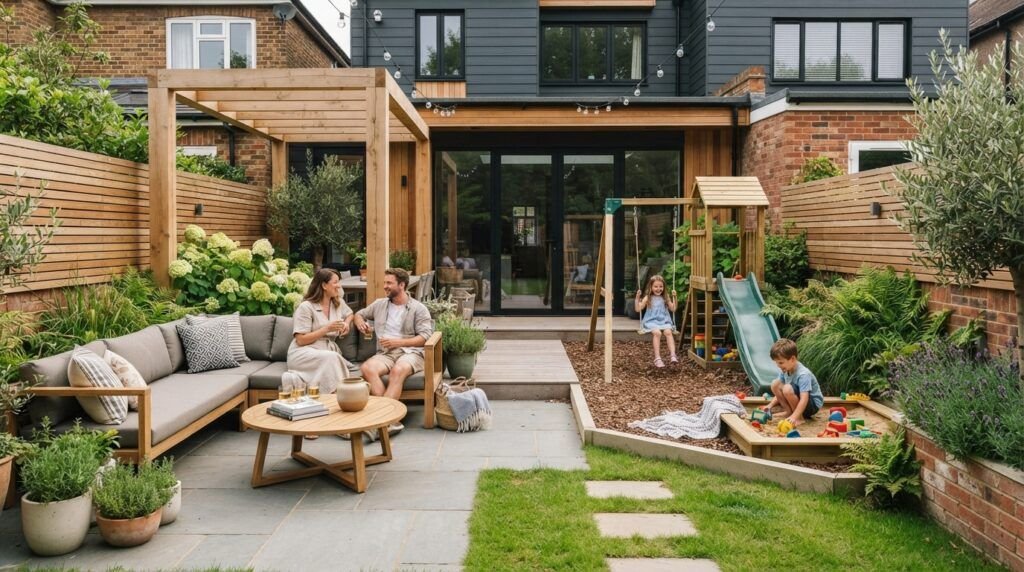
Small outdoor spaces often need to serve adults and children at the same time.
So, divide the yard into simple zones. Keep childrens activities to one edge of the yard, leaving the remaining space open for relaxing and entertaining.
This creates a Backyard Play Area without making the entire yard look like a playground.
21. Combine Several Small Features
When your yard is extremely limited, combine several activities in one compact zone.
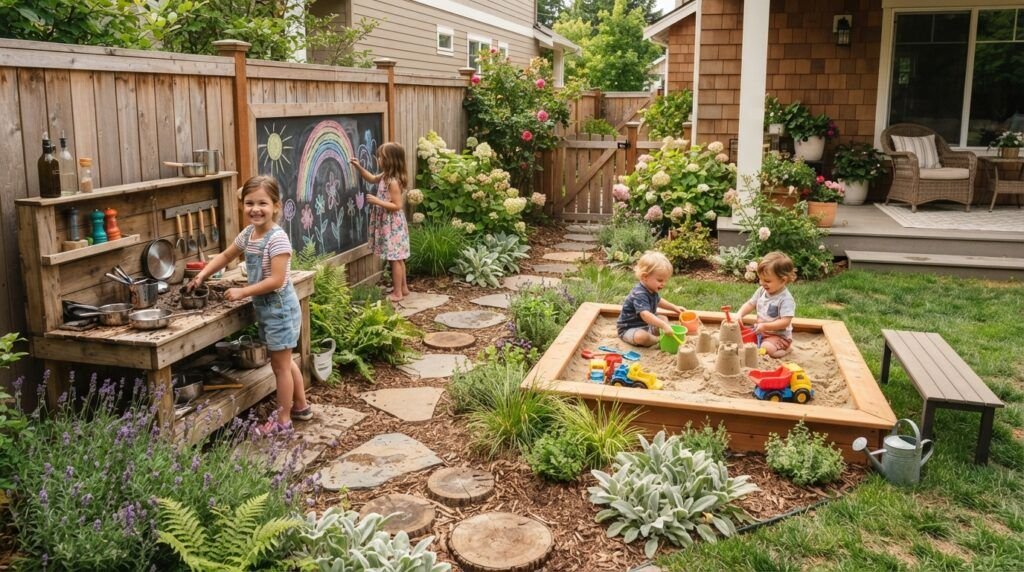
For example, place a sandbox beneath a chalkboard wall. Then, add stepping stones nearby and put a small mud kitchen beside the garden.
This approach makes every section useful while avoiding unnecessary clutter.
How to Plan Your Backyard Play Area Step by Step
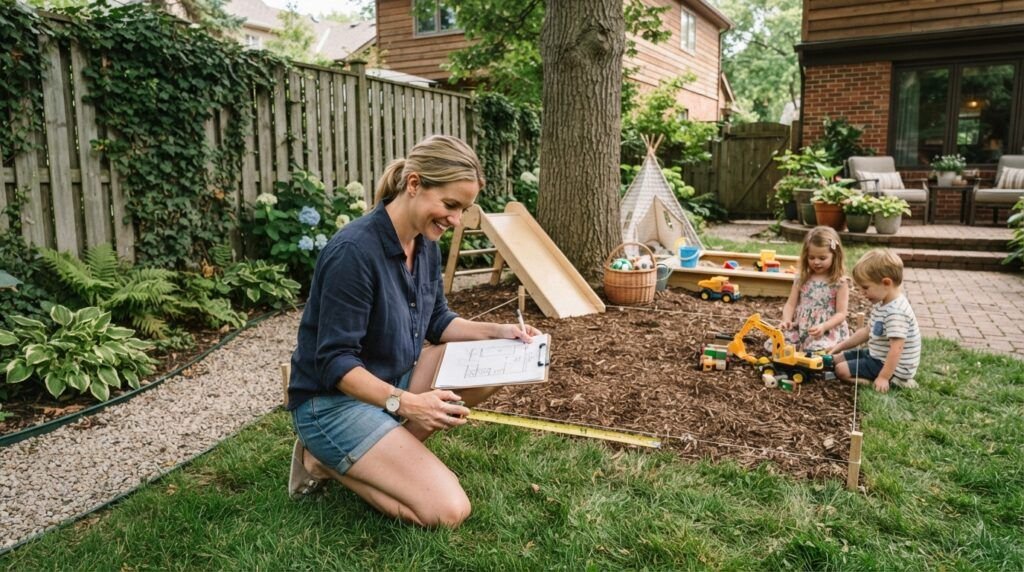
Before buying anything, measure the available space.
Next, think about how your children actually like to play. Active kids may enjoy climbing and balancing, while creative children may prefer art, chalk, or pretend play.
Then choose two or three activities that fit those interests.
Finally, leave open space for movement. A common mistake is filling every corner with equipment. Instead, a little empty space can make the whole yard feel larger.
8 Smart Tips for Small Outdoor Play Spaces
A few simple decisions can make a big difference.
- Measure the space before purchasing equipment.
- Keep the center open whenever possible.
- Use fences and walls for vertical activities.
- Choose features that serve more than one purpose.
- Keep toys inside attractive storage when not in use.
- Select age appropriate equipment.
- Add shade for comfortable outdoor play.
- Inspect play structures and surfaces regularly.
These practical choices help you create a Backyard Play Area that feels safe, useful, and uncluttered.
Love creating cozy outdoor spaces? Explore these Western Style Home Decor Ideas to bring rustic charm and modern comfort into every corner of your home.
What Is the Best Surface for a Backyard Play Area?
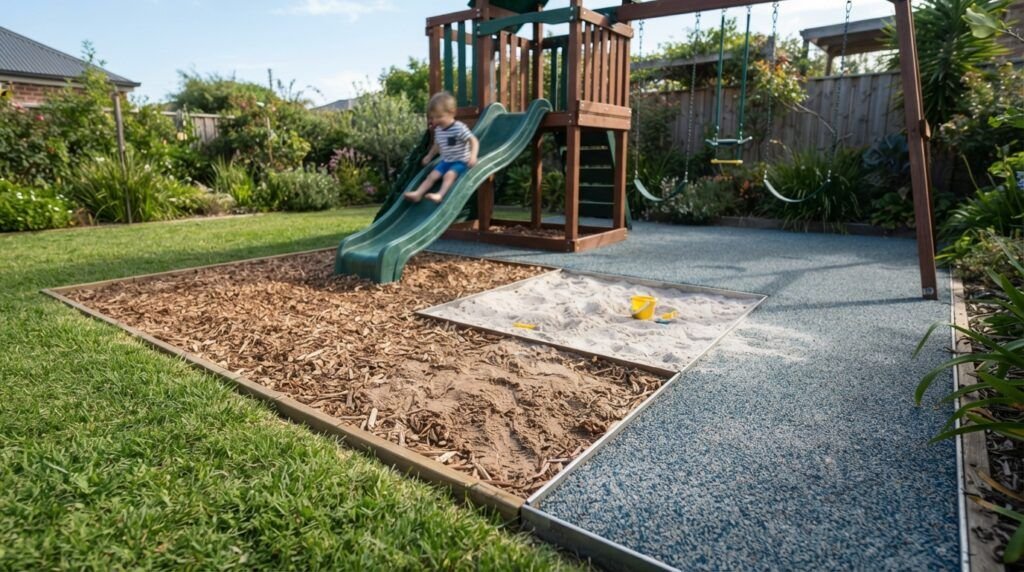
The best surface depends on what children will do in the space.
Grass can work for simple activities. However, areas beneath climbing equipment or other structures may require a more appropriate impact absorbing surface.
Possible options include:
- Grass
- Suitable playground mulch
- Sand
- Engineered wood fiber
- Purpose designed rubber surfacing
Always consider drainage, maintenance, stability, and fall protection before choosing a surface.
How Can You Make a Play Space Look Stylish?
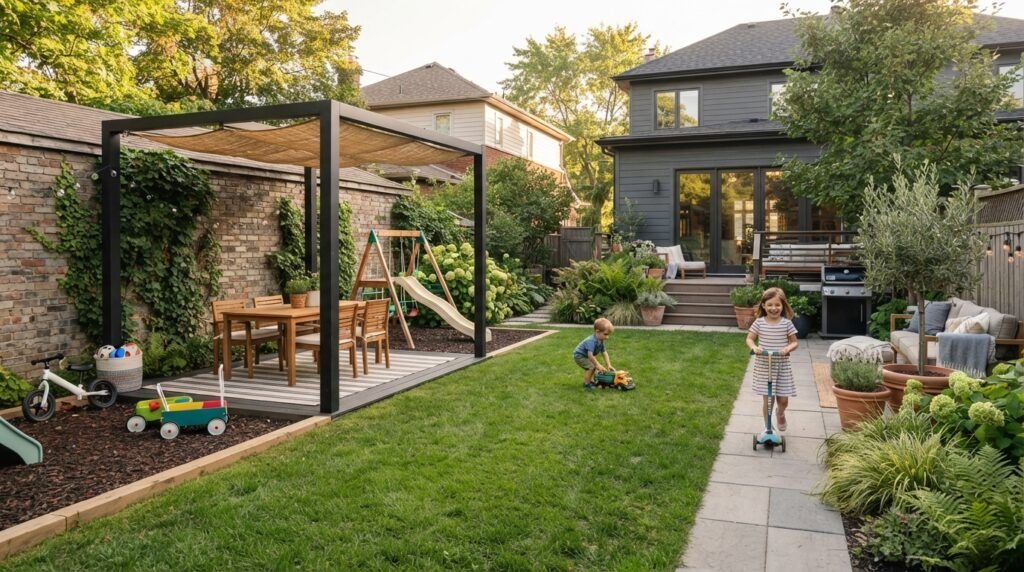
A children’s Backyard Play Area does not have to clash with your home decor.
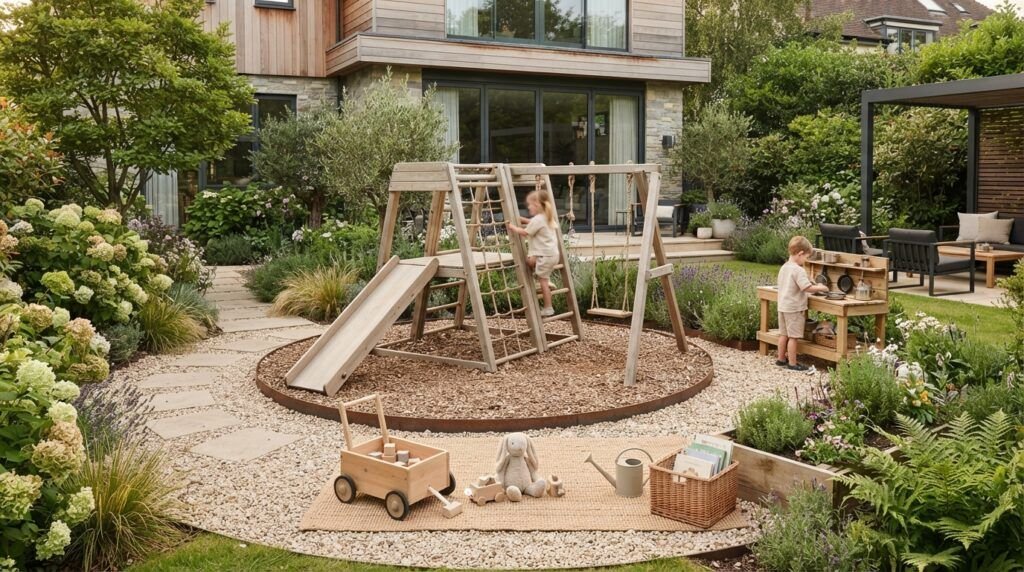
Choose natural wood, neutral colors, simple storage, and attractive plants. Also, keep bright toys organized when children finish playing.
You can create an even more cohesive look by repeating materials and colors used around your patio, garden, and exterior.
Frequently Asked Questions About Backyard Play Areas
What can I use instead of a traditional playground?
Consider adding a sandbox, chalkboard wall, mud kitchen, stepping stones, sensory garden, outdoor art area, water table, play tent, or pretend store.
How do I create a Backyard Play Area in a very small space?
Start with two or three compact activities. Use corners, fences, and walls for play features while keeping the center open for movement.
What are the best backyard play area ideas for narrow yards?
Use a linear layout. Place chalkboards, stepping stones, compact sandboxes, and other small activities along the edges while keeping a clear central path.
How can I create a Backyard Play Area on a budget?
Start with simple DIY projects such as a sandbox, chalk wall, mud kitchen, or obstacle course. You can also repurpose suitable outdoor furniture and containers.
Do children need a playground to enjoy the backyard?
No. Children can enjoy imaginative, sensory, creative, and active play through much simpler activities. A thoughtfully planned space can offer plenty of variety without a large playground.
Final Thoughts
Creating a fun outdoor space is not about having the biggest yard. It is about using the space you already have wisely.
The best small Backyard Play Area ideas focus on creativity, flexibility, and the interests of your children. A simple sandbox, chalk wall, stepping path, mud kitchen, or reading corner can provide plenty of opportunities for play.
Start with two or three ideas rather than trying to do everything at once. Then, watch how your children use the space and adjust it over time.
Most importantly, remember that children often need less equipment than we think. A small space with room for imagination can become the place where some of their happiest memories begin.