
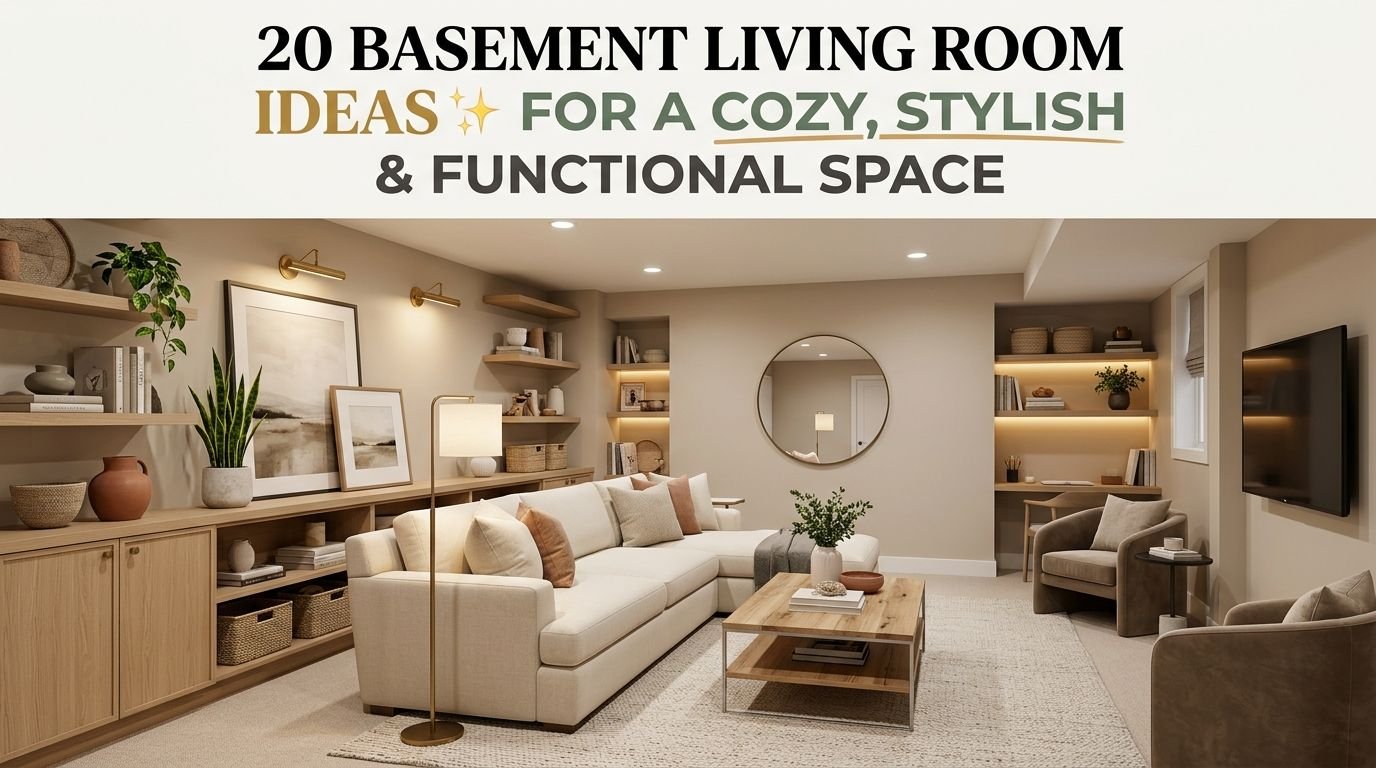
A basement can feel like the forgotten corner of a home, especially when it is dark, cramped, or filled with furniture that does not quite fit. But with the right choices, that same space can become the warmest and most inviting room in your home.
If you are searching for Basement Living Room Ideas because your lower level feels cold or awkward, you are not alone. The good news is that you do not need a huge budget or a complete renovation to make it feel better. With smart furniture placement, warm lighting, soft textures, and thoughtful accents, you can create a room that feels intentional and comfortable.
I have found that the biggest difference often comes from small changes. A better rug, warmer lamp, lighter wall color, or properly sized sofa can completely change how a basement feels.
Quick Answer
The best Basement Living Room Ideas combine comfortable furniture, layered lighting, warm colors, rugs, mirrors, practical storage, and carefully chosen decor. For smaller spaces, use furniture that fits the room, keep walkways open, and choose light colors to create an airy feeling. Low ceilings also benefit from low profile furniture and simple ceiling lighting.
1. Start With a Warm Neutral Foundation
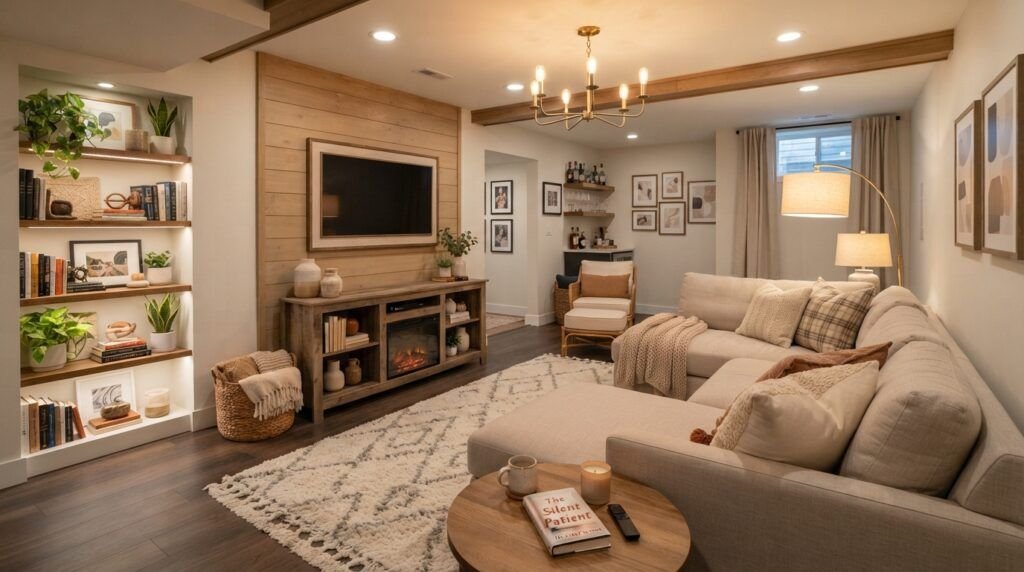
One of the easiest cozy basement living room ideas is to begin with a warm neutral palette. Cream, beige, taupe, soft gray, and warm white can instantly make a basement feel brighter and more welcoming.
Instead of using one flat shade, layer several similar tones. For example, pair cream walls with a beige sofa, a textured ivory rug, and warm wooden accessories.
This approach works especially well when your basement receives little natural light.
2. Choose Furniture That Fits the Room
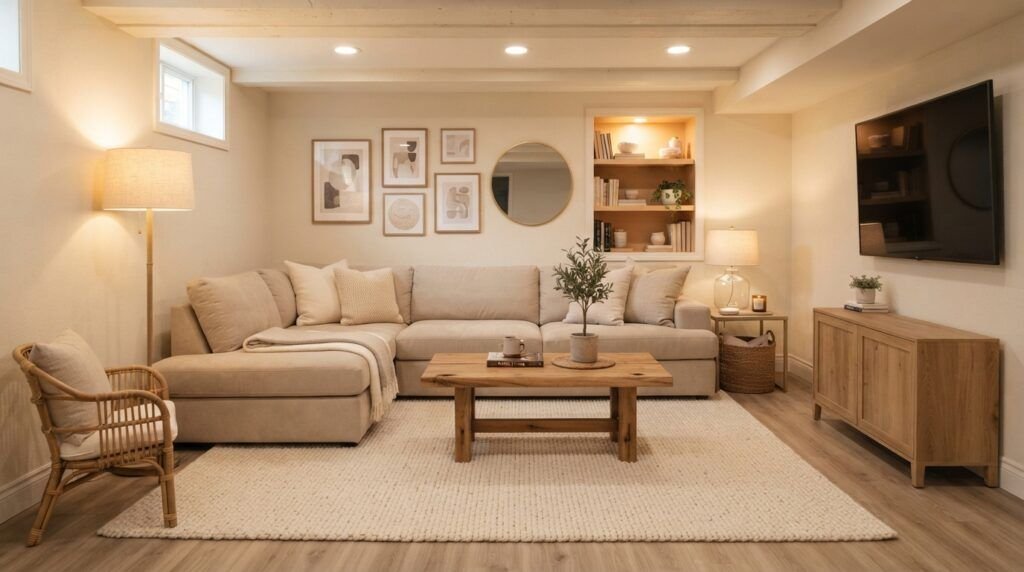
Oversized furniture can quickly make a basement feel smaller. Therefore, measure the room before buying a sofa, coffee table, or entertainment unit.
For a compact basement, consider a small sectional, apartment size sofa, nesting tables, or an ottoman that provides extra seating without taking up much floor space.
Good basement living room design ideas always begin with scale. Leave enough room to walk comfortably between the main pieces.
3. Make Low Ceilings Feel Less Heavy
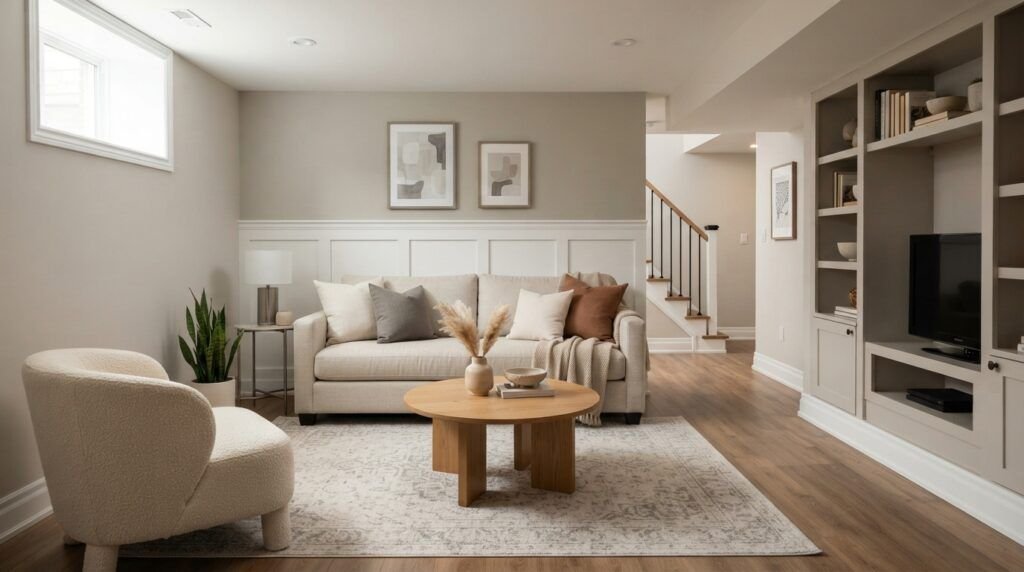
Basements often have lower ceilings, which can make the entire room feel compressed. However, a few smart changes can create a more open appearance.
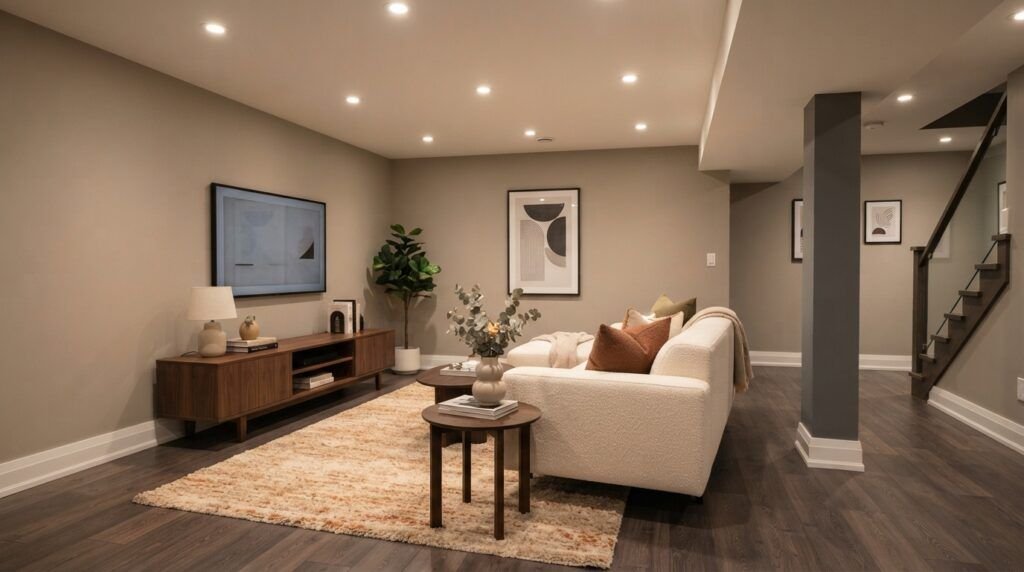
Choose low profile sofas, short media consoles, and simple furniture. Keep the upper walls relatively uncluttered, and use recessed or flush ceiling lights where possible.
These basement living room ideas with low ceilings work because they keep the visual focus closer to the floor while allowing the ceiling to feel less dominant.
4. Layer Your Lighting
Lighting can completely change a basement. If your room has limited daylight, do not depend on one ceiling fixture.
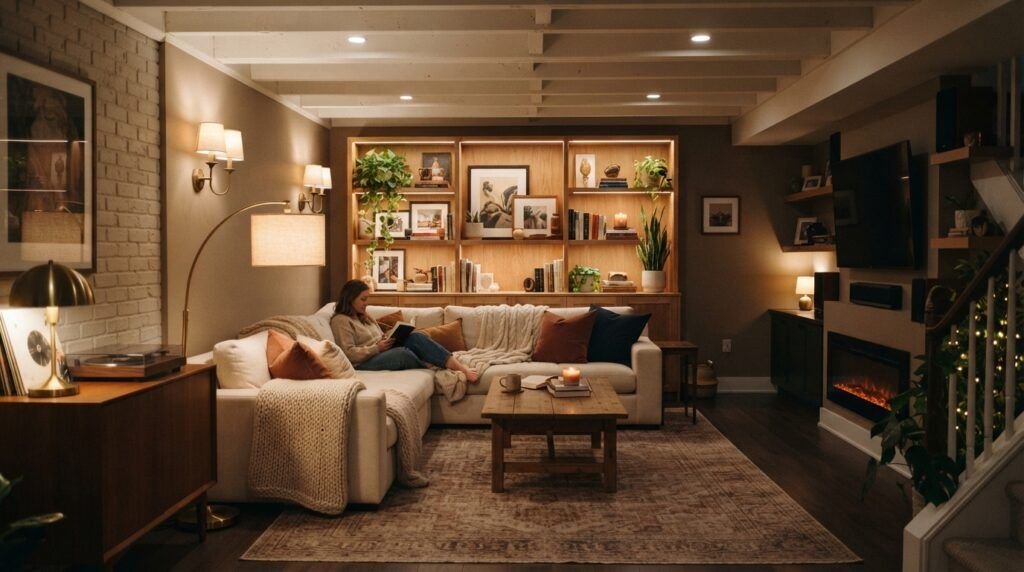
Instead, combine a floor lamp beside the sofa, table lamps on side tables, wall sconces, and subtle accent lighting on shelves.
Warm bulbs can make the room feel much more comfortable in the evening. As a result, even a windowless basement can develop a welcoming atmosphere.
5. Add a Large Area Rug
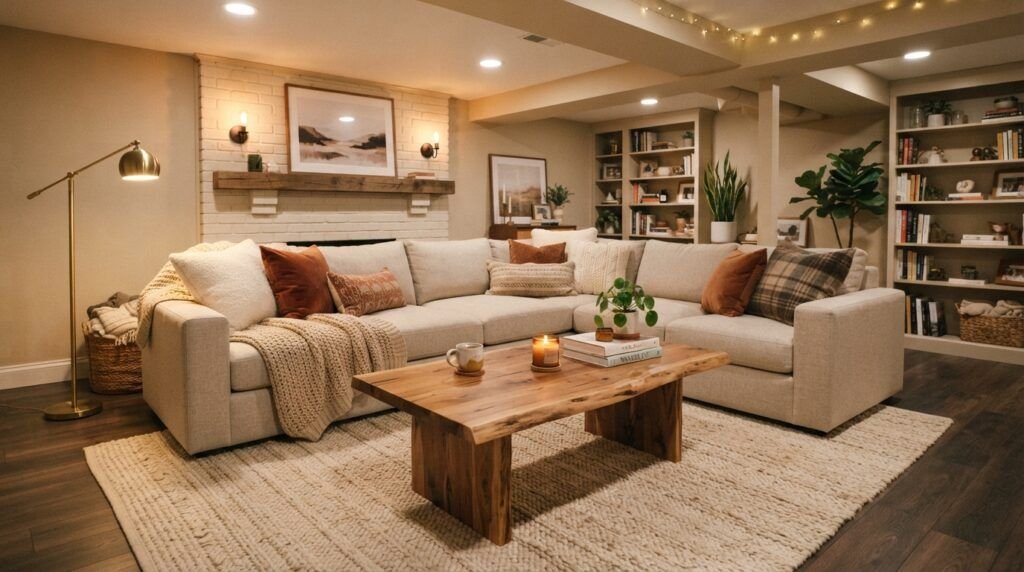
A rug can do much more than simply make the floor feel softer. It visually connects the furniture and gives the room a defined living area.
For small spaces, choose a rug large enough for at least the front legs of the sofa and chairs to sit on it. A textured neutral rug can work beautifully with both modern and traditional styles.
This is one of the simplest basement living room decorating ideas when you want noticeable results without replacing major furniture.
6. Use Mirrors to Reflect Light
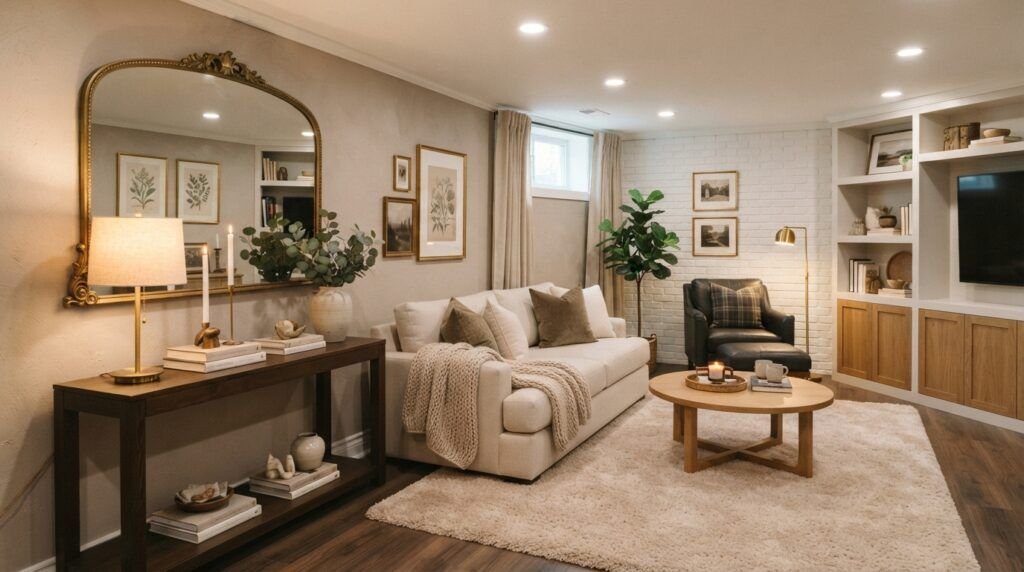
A basement can benefit greatly from mirrors. Place one opposite a window, doorway, lamp, or other light source to help reflect brightness around the room.
A large decorative mirror can also act as wall art. Choose a frame that matches your style, such as natural wood for a warm look or simple metal for a modern room.
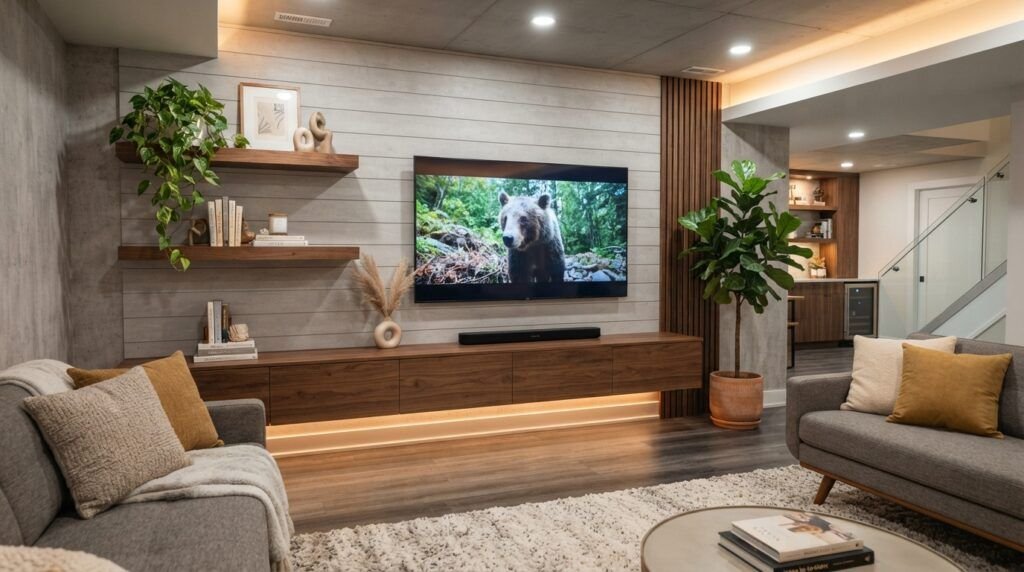
7. Create a Modern TV Wall
If your basement doubles as an entertainment space, make the television wall a deliberate feature instead of simply placing a screen on an empty wall.
Mount the television and add a slim console underneath. Floating shelves can provide space for books, small plants, framed art, and decorative objects.
Modern basement living room ideas often work best when entertainment technology blends naturally into the overall decor.
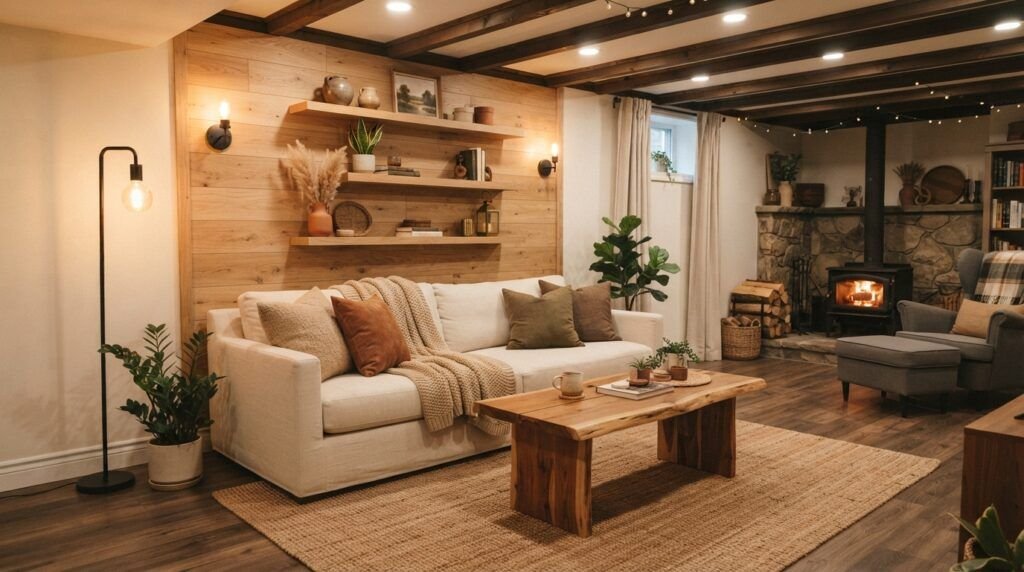
8. Bring Warmth With Wood Accents
Wood can prevent a basement from feeling cold or unfinished. You can introduce it through a coffee table, shelving, picture frames, side tables, or an accent wall.
You can make an impact without covering the entire wall. Even a few naturalwood elements can add warmth and visual texture.
This is particularly useful when your existing basement contains lots of concrete, drywall, or cool colored surfaces.
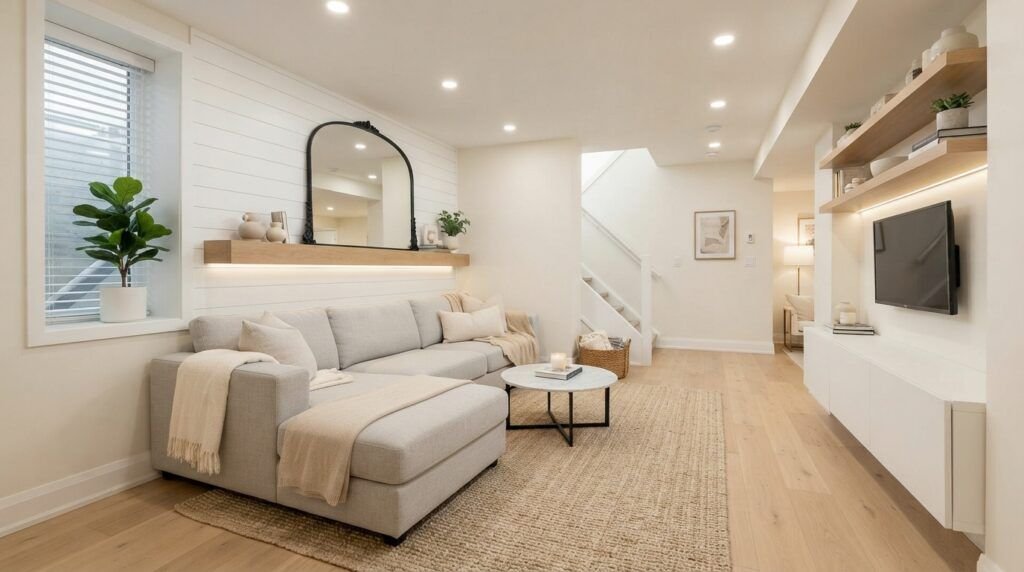
9. Make a Small Basement Feel Bigger
When working with limited square footage, every piece should earn its place. Select furniture with hidden storage, use vertical shelving, and avoid filling every corner.
Keep the main walkway open and choose furniture with visible legs when possible. The extra floor visibility can make the room appear more spacious.
These basement living room ideas for small spaces focus on creating breathing room rather than simply adding more decoration.
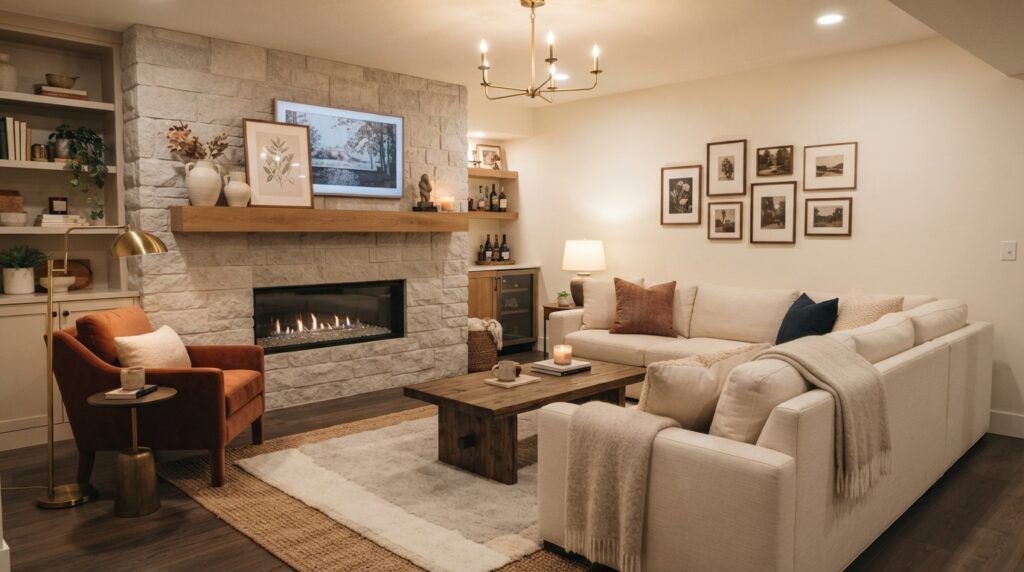
10. Design Around a Fireplace
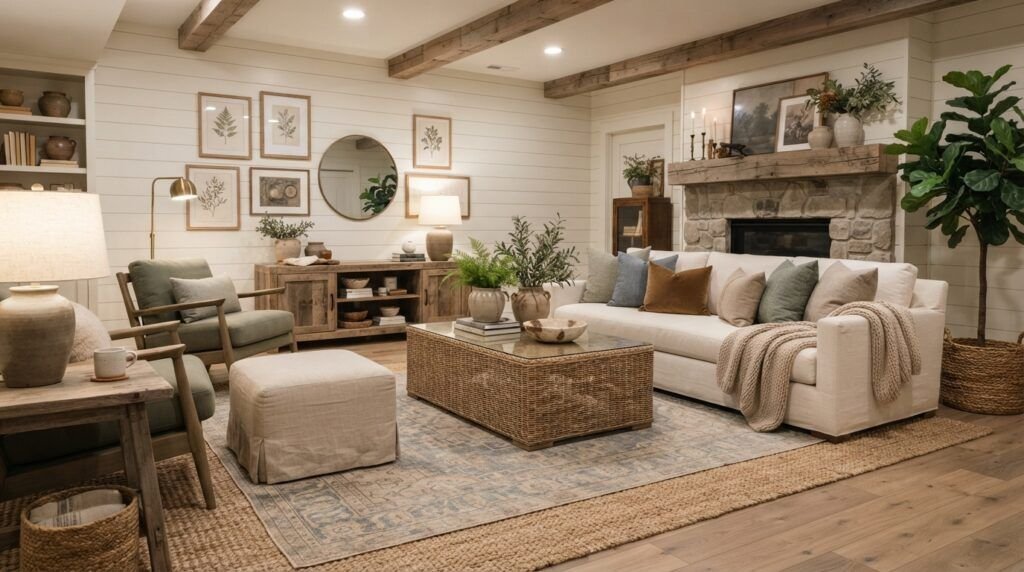
A fireplace can become the natural heart of the basement. Arrange the sofa and chairs toward it, then keep the surrounding decor simple.
If you already have a fireplace, emphasize it with artwork, wood accents, or a carefully styled mantel. If you are planning a new feature, choose a design that suits the scale of the room.
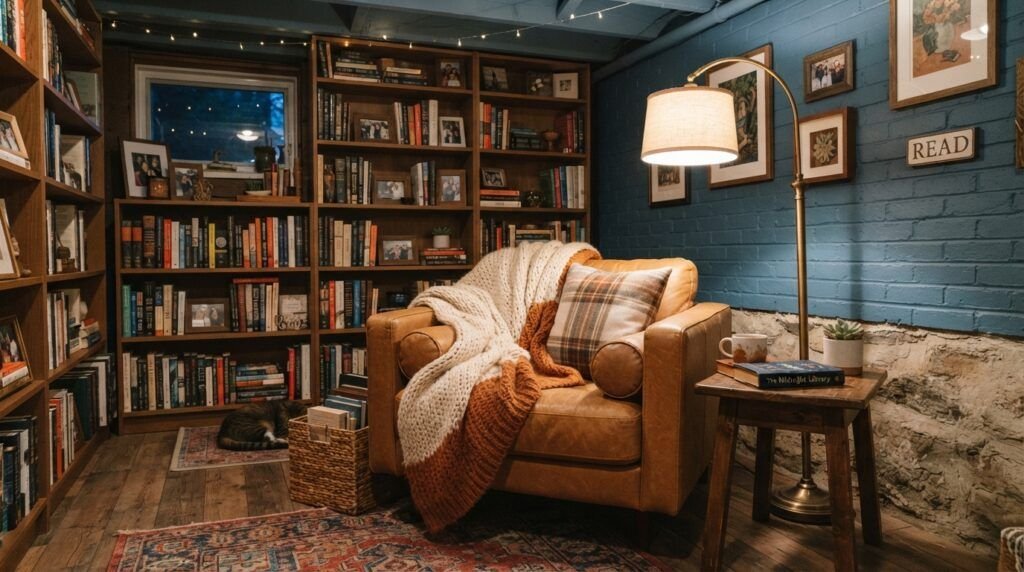
11. Create a Reading Corner
An unused basement corner can become a relaxing reading space. All you need is a comfortable chair, a small side table, a lamp, and a shelf for books.
This also helps divide a large basement into useful zones. Rather than leaving an empty corner, give it a clear purpose.
12. Use Built In Storage
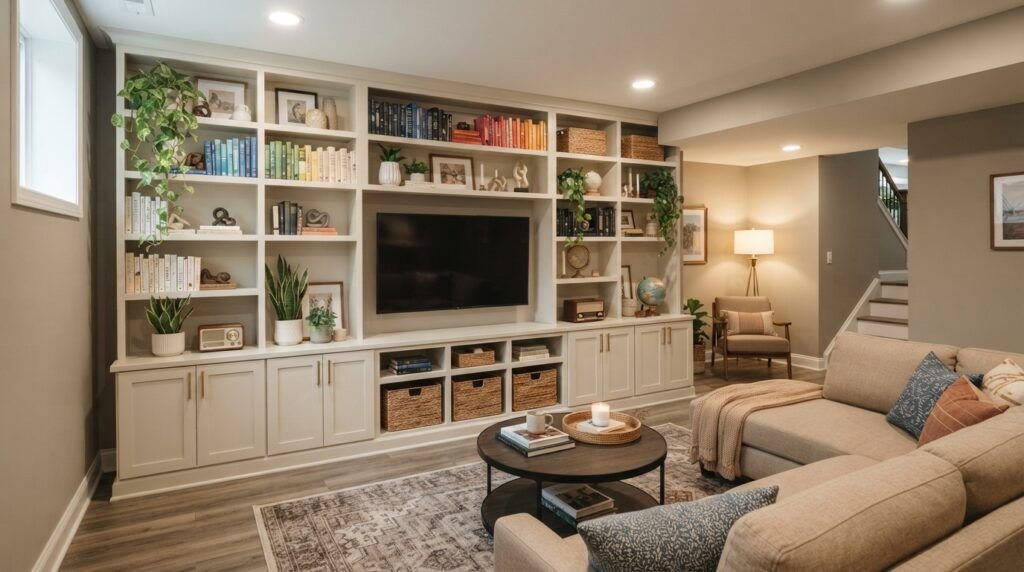
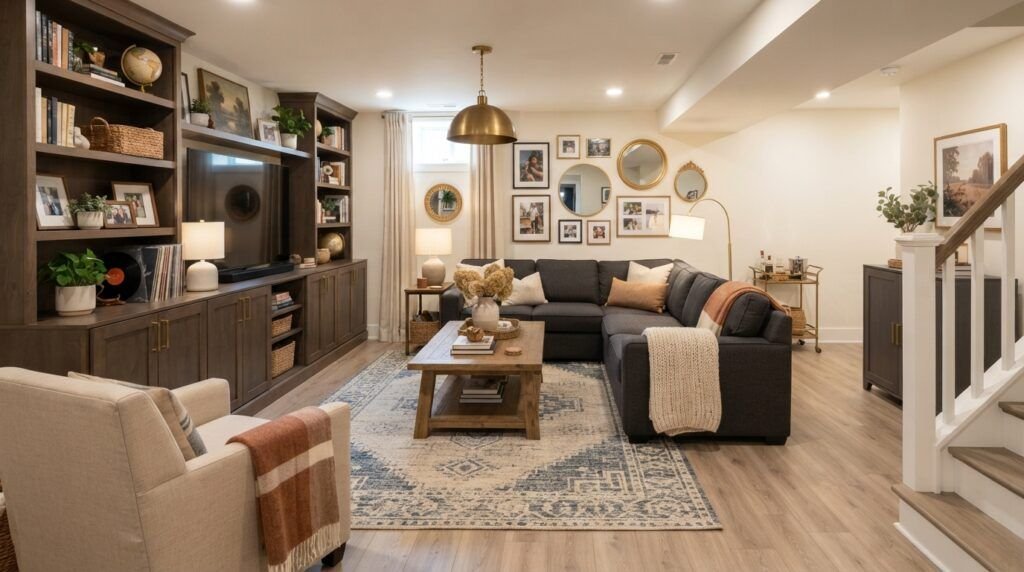
Storage is especially valuable when your basement serves multiple purposes. Built in shelves can hold books, baskets, games, plants, and decorative objects without consuming much floor space.
Mix open shelves with closed storage so the room does not look cluttered. Keep everyday items hidden and use open areas for attractive accents.
13. Try an Earthy Color Palette
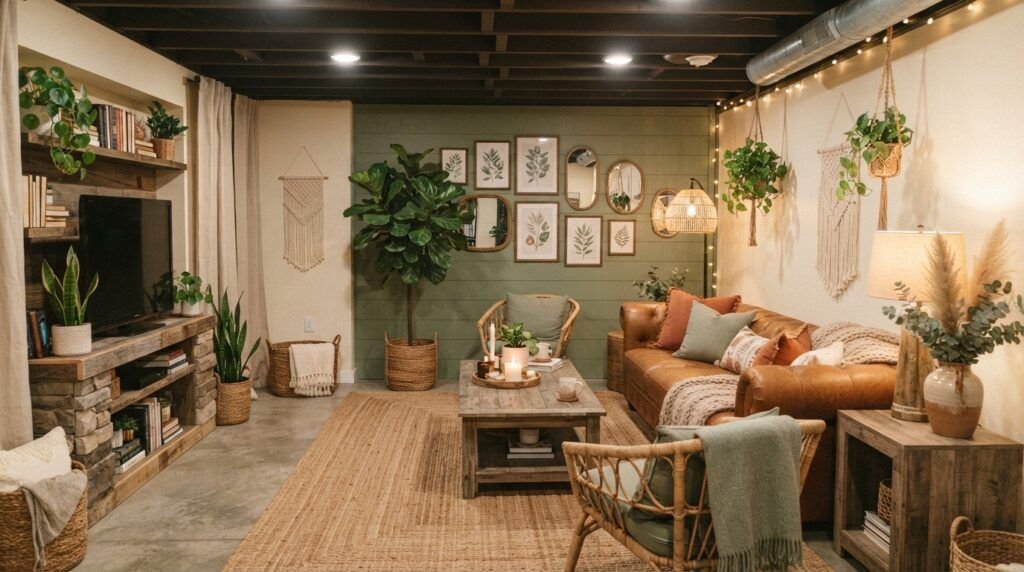
If you want a relaxed atmosphere, bring nature inspired colors into the room. Sage green, warm brown, terracotta, cream, muted blue, and tan can make the basement feel grounded.
You can introduce these colors through pillows, artwork, rugs, curtains, and small decorative accents instead of repainting the entire room.
14. Turn an Awkward Layout Into a Feature
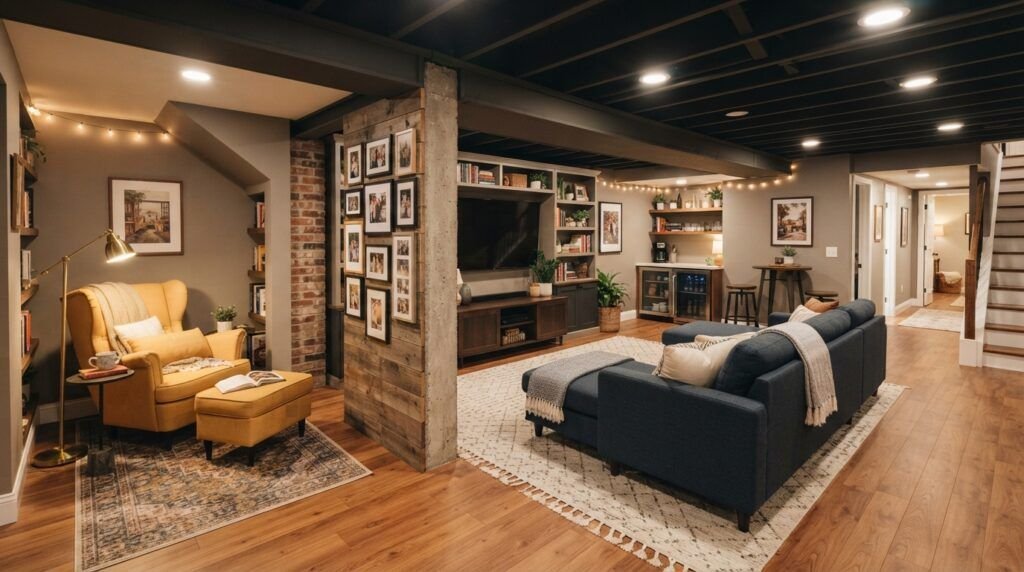
Columns, strange corners, and uneven walls can make basement decorating frustrating. Instead of fighting these features, use them to define separate areas.
Place a reading chair in one corner, create a television zone on another wall, or use a column as the boundary between seating areas.
Good basement living room design ideas work with the architecture rather than pretending awkward features do not exist.
15. Add Soft Textures Everywhere
Basements can sometimes feel hard because of their flooring and construction materials. Soft textures help balance that feeling.
Add cushions, throws, curtains, rugs, woven baskets, and fabric ottomans. Layering these materials creates depth and makes the room feel more comfortable.
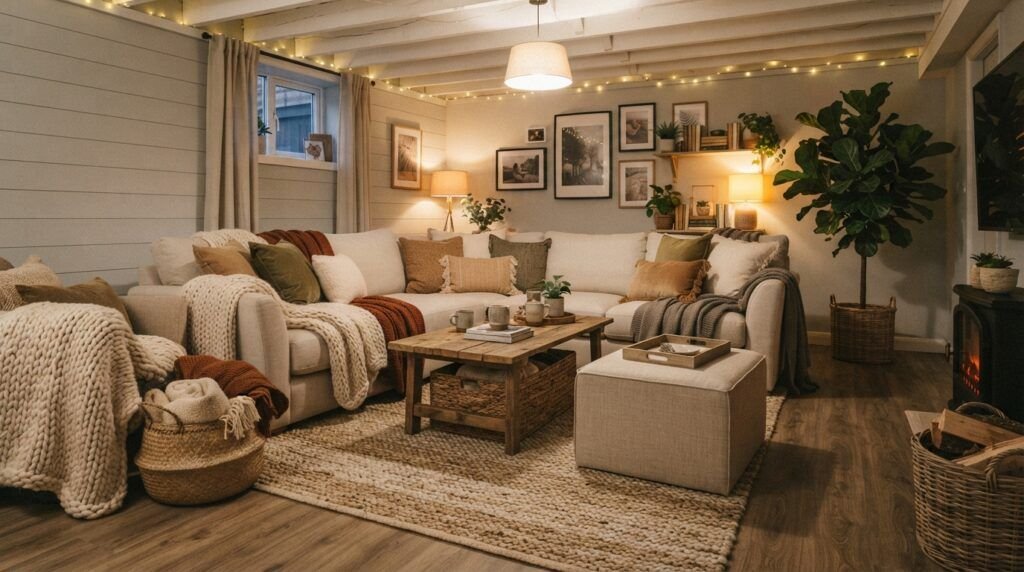
16. Create a Moody Lounge
Not every basement needs to be bright and white. If you prefer a dramatic look, embrace deeper shades such as charcoal, navy, forest green, or chocolate brown.
The key is to balance darker colors with warm lighting and lighter textiles. This can create a sophisticated lounge that feels perfect for movie nights and relaxing evenings.
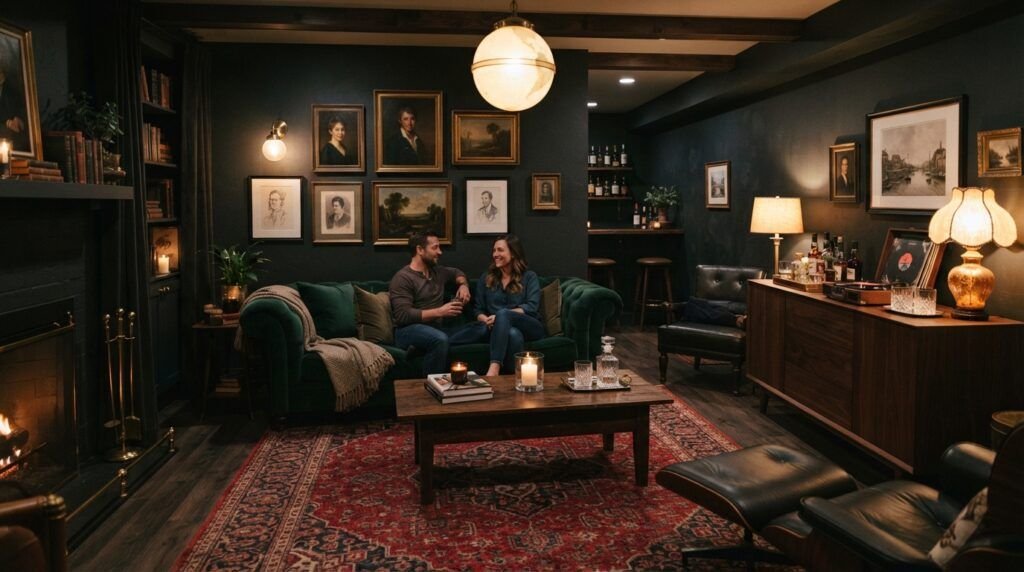
17. Add Plants and Natural Accents
Plants can make a basement feel more alive. Choose varieties that suit the actual light conditions, or use quality artificial greenery when natural light is limited.
Wood, stone, woven baskets, and natural fibers can also introduce an organic feeling without requiring major changes.
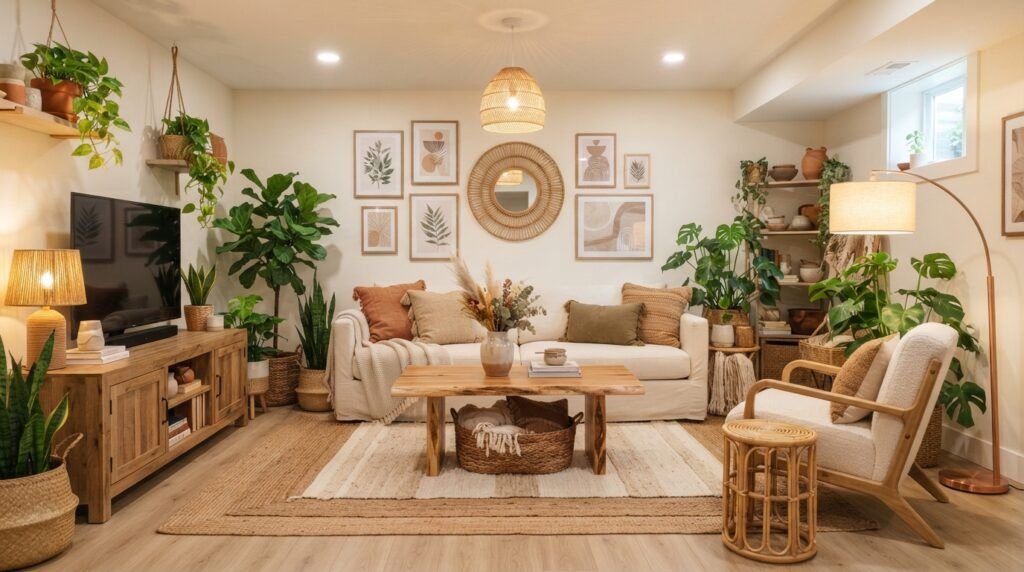
18. Create a Multi Purpose Living Area
A basement often needs to do more than one job. You might need a place for watching television, working, reading, playing games, or storing belongings.
Use rugs and furniture placement to create separate zones. A compact desk can sit behind a sofa, while a small table can create a game area without taking over the room.
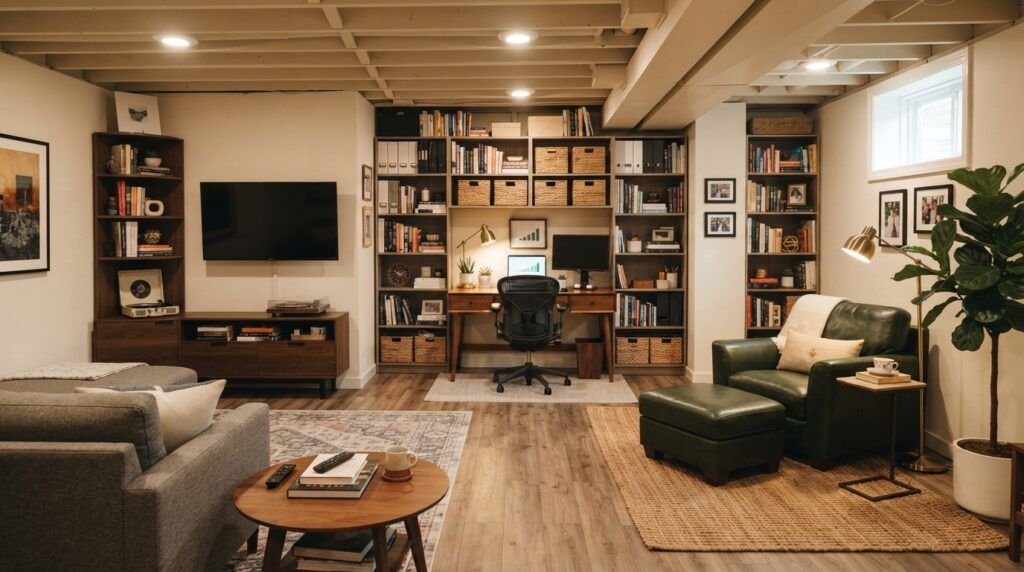
19. Refresh the Room on a Budget
You do not need to renovate everything to refresh a tired basement. Start with affordable changes that have a visible effect.
Try replacing old cushions, adding a new rug, changing lampshades, hanging artwork, introducing plants, or rearranging furniture.
Among basement living room decorating ideas, these small upgrades are often the easiest for renters or budget conscious homeowners.
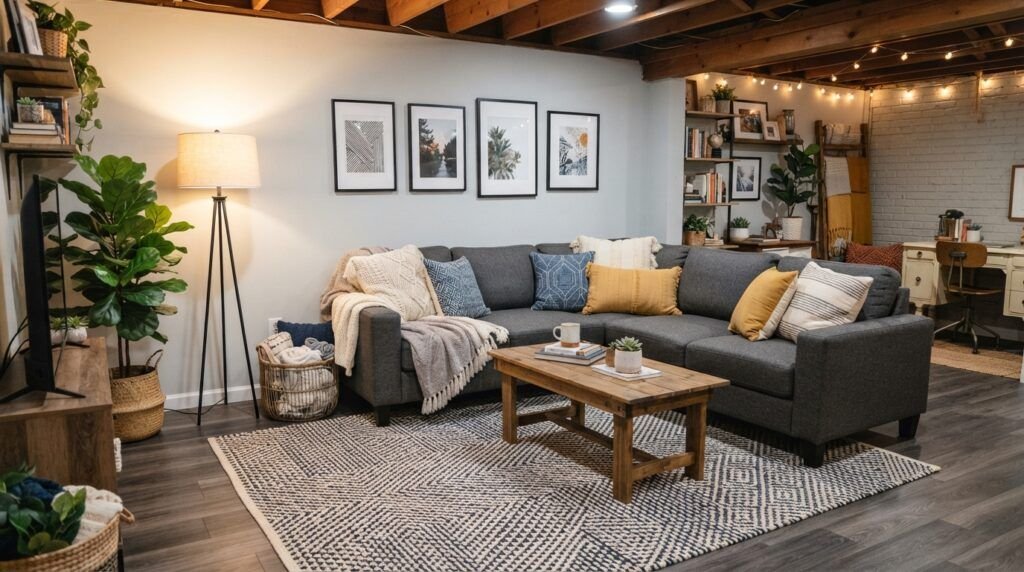
20. Personalize the Final Layer
The best room does not look like a furniture showroom. It should tell your story.
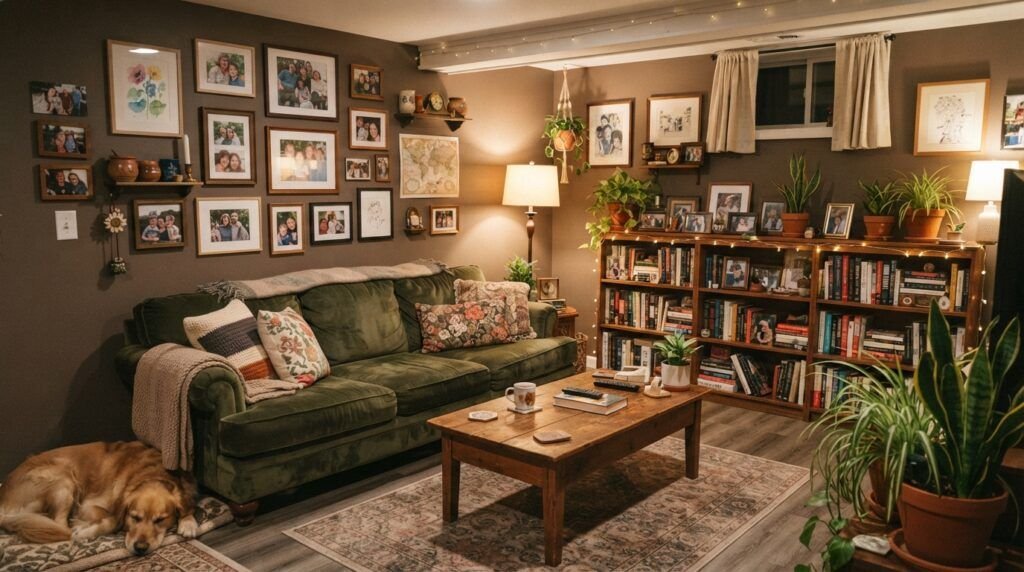
Display a few favorite books, framed photographs, travel finds, artwork, or meaningful objects. Keep the collection edited so the room still feels calm.
Finally, take a step back and consider how everything works together. Remove anything that feels unnecessary and keep the pieces that make you happy.
Want to elevate every corner of your home? Explore these Stair Riser Ideas to turn an ordinary staircase into a stylish statement feature.
Practical Tips for a Better Basement Living Room
Before you finish your makeover, keep these simple tips in mind:
- Measure furniture before buying it.
- Keep main walking paths clear.
- Use multiple light sources instead of one ceiling light.
- Choose warm bulbs for a welcoming atmosphere.
- Use mirrors strategically to reflect available light.
- Pick rugs that visually connect the seating area.
- Mix closed and open storage.
- Avoid oversized furniture in compact rooms.
- Add natural textures to soften hard surfaces.
- Keep decorative objects edited rather than overcrowded.
These small decisions can make Basement Living Room Ideas work much better in real homes.
Frequently Asked Questions
How do you make a basement living room cozy?
Use warm lighting, comfortable seating, rugs, soft blankets, textured pillows, natural wood, and warm colors. These elements add visual and physical warmth, even when the basement receives little natural light.
How do you make a small basement living room look bigger?
Use light colors, appropriately sized furniture, mirrors, open shelving, and clear walkways. Keep the room open by avoiding furniture you don’t truly need. A large rug can also help unify the seating area.
What colors work best in a basement living room?
Warm white, cream, beige, taupe, sage, muted blue, and earthy shades are excellent choices. Lighter colors can make dark rooms feel brighter, while deeper colors work well when balanced with strong layered lighting.
How do you decorate a basement with low ceilings?
Choose low profile furniture, simple ceiling fixtures, light colors, and uncluttered upper walls. Horizontal artwork and carefully positioned lighting can also help the ceiling feel less visually heavy.
What are the best lighting choices for a basement?
Use several layers of lighting rather than relying on one fixture. Combine recessed or flush ceiling lights with floor lamps, table lamps, sconces, and accent lights. Warm light usually creates a more inviting evening atmosphere.
Final Thoughts
A basement does not have to feel like an afterthought. With thoughtful planning, even a small or awkward lower level can become a room where you genuinely want to spend time.
The best Basement Living Room Ideas focus on how the space feels as much as how it looks. Start with the layout, solve your lighting problems, choose furniture that fits, and then add rugs, artwork, plants, pillows, and other personal accents.
Most importantly, do not try to change everything at once. Begin with the biggest problem in your room and make one improvement at a time. A few smart choices can turn a dark basement into a cozy, stylish, and functional part of your home.